
Understanding industrial waste management requires moving beyond the basic concept of natural decomposition. In our experience working with large-scale agricultural enterprises, we view a compost machine not as a magic box, but as a highly engineered environment designed to accelerate natural biological processes. For modern facilities, managing organic waste is a continuous operational demand that requires a systematic approach to control odor, moisture, and processing cycles. By investing in dedicated processing equipment, commercial operations can transform raw organic waste into a stable, valuable byproduct while maintaining a clean and compliant facility footprint.
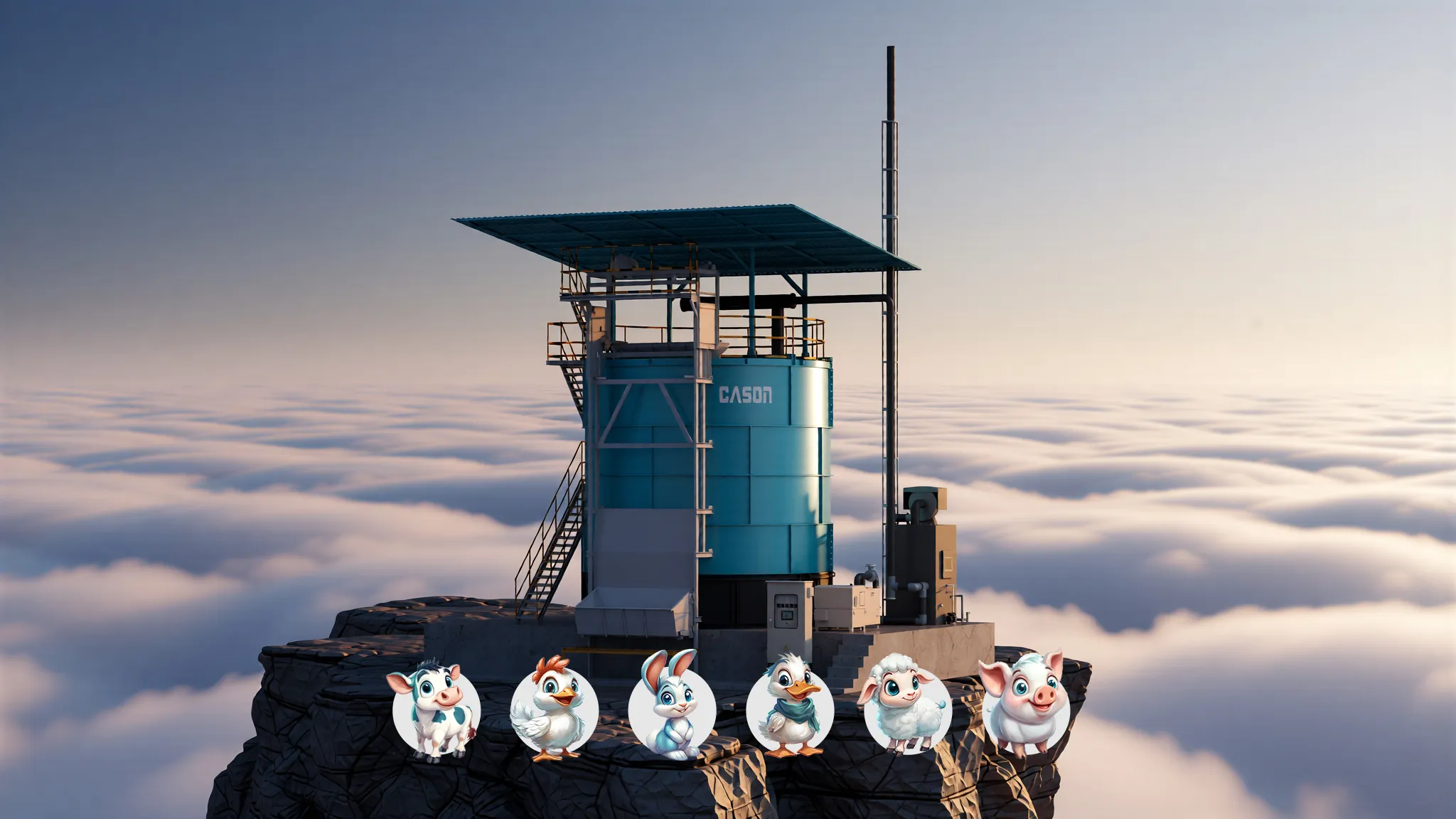
How a Compost Machine Accelerates Aerobic Decomposition
At its core, a compost machine optimizes the life cycle of aerobic microorganisms by precisely regulating their environmental conditions. Raw organic waste, particularly livestock waste, is naturally rich in nutrients but often suffers from high moisture levels and poor structure, which lead to anaerobic pockets and foul odors. Through our engineering developments at CASON, we design systems that introduce continuous mechanical agitation and forced-air aeration. This constant supply of oxygen prevents the pile from turning anaerobic, allowing thermophilic bacteria to thrive and break down the organic matter at a fraction of the time required by traditional open windrows.
Where Enclosed Treatment Fits in Commercial Farm Layouts
Implementing a poultry composting machine becomes essential when a facility faces spatial constraints, strict environmental regulations, or unpredictable seasonal weather. Traditional open-air composting requires vast tracts of land and leaves the process completely vulnerable to heavy rainfall and freezing temperatures, which stall microbial activity. An enclosed structural design insulates the composting mass, keeping internal temperatures stable regardless of external climate conditions. This footprint-efficient approach allows commercial farms and fertilizer processors to localize their waste treatment right next to the production houses, drastically reducing internal material transport costs.
Technical Alignment for Industrial Equipment Integration
Integrating an industrial manure fertilizer fermentation tank into an existing agricultural workflow demands precise technical coordination during the planning phase. Project teams must evaluate up-stream loading mechanisms, such as automated conveyors or heavy loaders, alongside down-stream curing and storage space requirements. Our ODM and OEM manufacturing focus centers on customizing these parameters to match a facility’s specific daily waste volume, power availability, and civil foundation limits. By addressing these structural interfaces before production begins, engineering teams can ensure the equipment integrates seamlessly into the farm’s daily operational flow.
Evaluating Long-Term Operational Support and Customization
Investing in industrial-grade waste infrastructure is as much about long-term operational reliability as it is about the initial technical specifications. For B2B procurement teams, a successful deployment depends heavily on robust post-commissioning support, including clear preventive maintenance schedules, straightforward operator training, and reliable spare parts sourcing. When we engage in custom OEM or ODM engineering discussions, we encourage partners to clearly define their local climate challenges, electrical standards, and raw material characteristics early in the design phase. This disciplined, documentation-first approach protects the investment and ensures the system delivers repeatable, compliant performance year after year.