
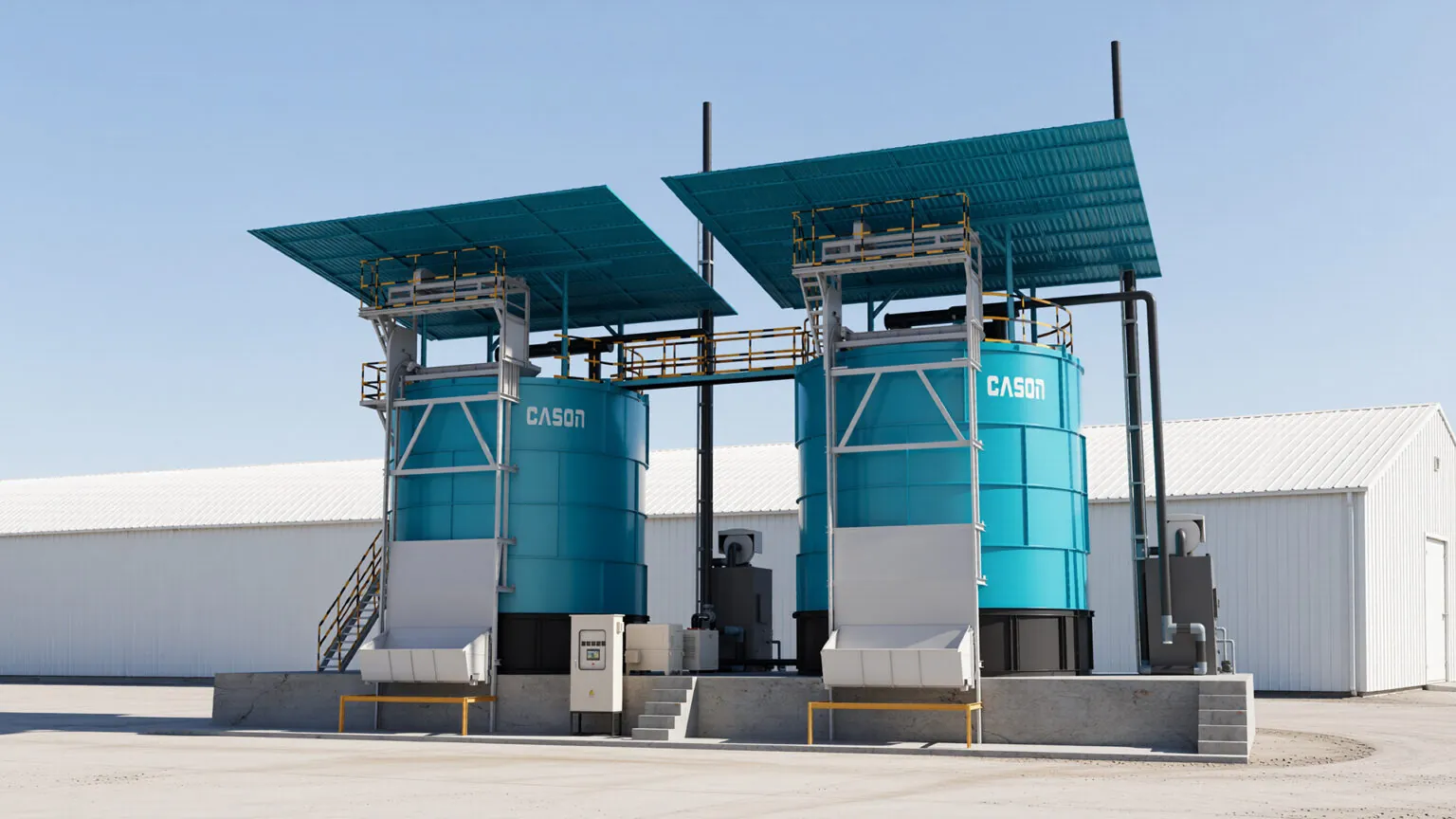
Temperature is one of the most critical elements in successful in-vessel composting. Proper temperature management ensures that organic waste breaks down efficiently and safely, transforming materials into stable, nutrient-rich compost. For businesses exploring advanced solutions, understanding how temperature influences microbial activity, decomposition rates, and material quality can help optimize operations. Cason in-vessel composting systems, such as the DT-320E, are designed with deliberate temperature control in mind to support predictable, high-quality compost production.
Why Temperature Matters in In-Vessel Composting
In-vessel composting involves placing organic materials within a controlled environment where factors like airflow, moisture, and temperature are actively managed. Temperature serves as both a driver and an indicator of biological activity. Microorganisms responsible for breaking down organic matter thrive within specific thermal ranges. When temperatures rise to appropriate levels, these microbes work vigorously to decompose waste. If temperatures climb too high or fall too low, microbial performance can slow or stall, leading to prolonged processing times or uneven results.
Maintaining thermal balance also has implications for sanitation. Certain temperatures help reduce pathogens and unwanted organisms, resulting in compost that meets safety standards for agricultural reuse. This is particularly important for businesses handling food processing residuals, livestock waste, or biosolids, where sanitary concerns and regulatory requirements are common.
How In-Vessel Composting Systems Manage Temperature
In-vessel composting systems provide enclosed volumes where conditions are monitored and adjusted. Temperature control starts with the design of the composting chamber. Effective systems allow controlled airflow and insulation that help retain heat generated by microbial activity. These features contribute to stable internal conditions that accelerate decomposition and limit heat loss.
Advanced sensors play a key role by continuously tracking thermal conditions throughout the composting mass. Data from these sensors informs adjustments to ventilation rates and mixing cycles. For example, if a hotspot develops that could hinder microbial balance, targeted airflow or agitation can redistribute heat and oxygen to maintain uniform conditions.
The DT-320E model from Cason integrates sophisticated temperature monitoring and control capabilities. Real-time data allows operators to make informed adjustments, helping optimize the composting process while protecting material quality. Such systems can balance internal heat generation with necessary cooling when temperatures exceed optimal ranges.
Temperature’s Impact on Operational Efficiency
Consistent temperature management helps businesses achieve predictable processing cycles. When organic waste moves through thermophilic (high-heat) phases efficiently, overall cycle times shorten, and throughput increases. Reliable temperature control also means fewer surprises and reduced risk of material reverting to earlier decomposition stages.
For facilities with strict timelines or high waste volumes, well-controlled thermal dynamics translate to smoother workflows. Investments in systems that allow precise temperature regulation can reduce labor and oversight demands while improving compost quality.
Final Insights
Temperature control is not simply a technical feature in in-vessel composting systems. It is the foundation of efficient, safe, and consistent organic waste processing. When thermal conditions are properly managed, microbial communities remain active, decomposition progresses steadily, and compost quality improves.
At Cason, we design our in-vessel composting systems with temperature science at the core. We focus on stable airflow, reliable monitoring, and intelligent control strategies to help our clients achieve consistent composting performance. By combining practical engineering with biological understanding, we support businesses in building dependable organic waste treatment operations that align with long-term sustainability goals.