
Efficient manure treatment is a key part of modern livestock farming. As farms expand, managing large volumes of organic waste becomes more complex, especially when environmental regulations and operational efficiency must be balanced. Equipment such as a poultry composting machine helps farms process manure safely and convert it into useful organic fertilizer.
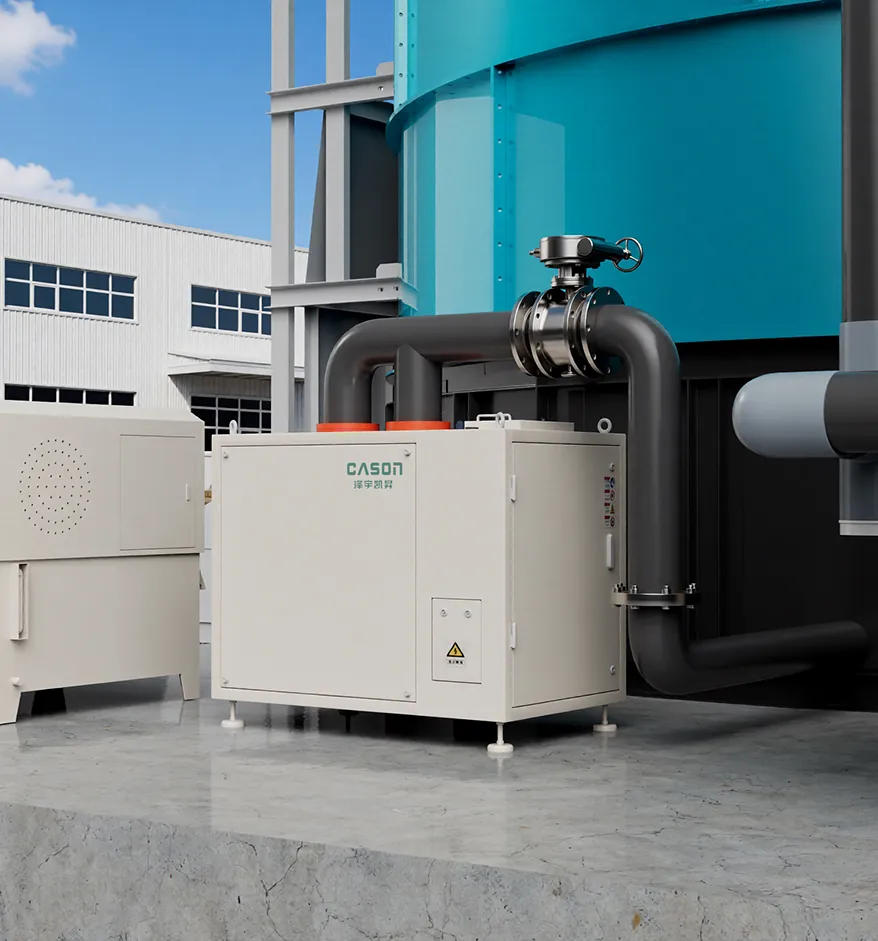
However, choosing the correct tank capacity is one of the most important decisions when planning an industrial composting system. At Cason, we believe that selecting the right capacity allows farms to maintain stable operations, reduce waste accumulation, and achieve efficient organic waste recycling.
Understanding the Role of Fermentation Capacity
A livestock fermentation tank is designed to process animal manure and other organic waste through controlled microbial decomposition. Inside the tank, aeration, mixing, and temperature control allow microorganisms to break down organic material, eliminate pathogens, and reduce moisture content.
The capacity of the tank determines how much manure can be treated within a specific time period. Industrial fermentation tanks are available in multiple sizes, often ranging from small systems handling a few cubic meters per day to large tanks exceeding 200 cubic meters.
Selecting a tank that matches the daily waste output of a farm is essential. If the system is too small, manure may accumulate faster than it can be processed. If it is too large, farms may face higher equipment and operational costs than necessary.
Evaluating Farm Scale and Manure Production
The first step in selecting the appropriate tank capacity is estimating the amount of manure generated on the farm. Poultry houses, pig farms, and cattle facilities produce different volumes of waste depending on livestock numbers and feeding conditions.
A practical approach is to calculate the average daily manure output and match that value with the treatment capacity of the fermentation system. Some fermentation tanks process around 7 to 10 cubic meters of organic waste per day, while larger models can handle 12 to 28 cubic meters daily depending on the tank size and configuration.
In addition to livestock numbers, farms should also consider moisture content, bedding materials, and other organic residues. These factors influence the total material volume entering the composting system.
Integrating Poultry Composting Machines
A poultry composting machine often works together with a fermentation tank to improve treatment efficiency. Composting machines mix manure with auxiliary materials such as straw or sawdust, creating the ideal structure for microbial activity.
This preparation stage improves airflow and moisture balance, allowing the fermentation tank to operate more effectively. The combined system shortens the composting cycle and produces stable organic fertilizer that can be reused in agriculture.
Matching Capacity With Operational Goals
Beyond waste volume, farms should also evaluate operational goals when selecting a livestock fermentation tank. Factors such as available land area, automation level, and labor availability influence equipment configuration.
For example, continuous fermentation systems can process manure daily with automated feeding and discharge functions. Batch systems may require more manual handling but offer flexibility for smaller farms.
At Cason, fermentation equipment such as the C-160E is designed to support medium to large livestock operations by combining efficient aeration, mixing, and temperature control within a compact structure. When paired with a suitable poultry composting machine, farms can create a reliable waste treatment process that converts manure into valuable organic fertilizer while maintaining stable and efficient farm management.