
Modern livestock farms face increasing pressure to manage animal waste responsibly. Poultry and livestock operations produce large volumes of manure every day, and improper disposal can lead to odor problems, water contamination, and regulatory penalties. For this reason, many farms are turning to advanced waste treatment systems such as the poultry composting machine.
At Cason, we focus on practical waste management solutions that help farms comply with environmental standards while improving operational efficiency.
Environmental Challenges in Livestock Farming
Livestock and poultry farms generate manure that contains organic matter, nitrogen compounds, and microorganisms. If not handled properly, these materials can create environmental risks such as groundwater pollution and air quality concerns. Governments in many regions have established strict regulations requiring farms to treat manure, reduce odors, and prevent untreated waste discharge.
Traditional manure storage or open composting methods often struggle to meet these requirements. These methods may produce strong odors, attract insects, and require large areas of land for storage. As farms grow in scale, these issues become even more difficult to manage.
Modern treatment technologies, such as fermentation tanks, provide a more controlled and environmentally responsible approach.
How Livestock Fermentation Tanks Support Compliance
A livestock fermentation tank creates a controlled environment for aerobic microbial decomposition. Microorganisms break down organic waste under regulated temperature, oxygen, and moisture conditions, turning manure into stable organic fertilizer.
This process provides several advantages for farms working to meet environmental regulations.
First, fermentation tanks operate in a sealed structure that prevents odor leakage and reduces the release of harmful gases. Odor treatment systems can collect and purify exhaust gases before discharge, helping farms maintain acceptable emission levels.
Second, the controlled fermentation process eliminates pathogens and harmful substances commonly found in untreated manure. High temperatures generated during aerobic fermentation help sterilize the waste, making the final product safer for agricultural use.
Third, automated systems improve consistency and monitoring. Intelligent control systems can track temperature, oxygen levels, and fermentation conditions in real time, allowing operators to maintain stable treatment performance and document compliance with environmental standards.
These features allow farms to manage manure treatment in a predictable and traceable way.
The Role of Poultry Composting Machines
A poultry composting machine works alongside fermentation tanks to process organic waste efficiently. These machines mix, heat, and aerate manure to accelerate microbial decomposition and reduce the overall volume of waste.
Modern composting equipment includes automated feeding systems, mixing units, heating components, and deodorization modules. Together, these systems maintain the conditions necessary for rapid composting and odor control.
The final product is nutrient-rich organic fertilizer that can be applied to farmland. Instead of being a waste disposal problem, manure becomes a valuable agricultural resource.
Practical Solutions from Cason
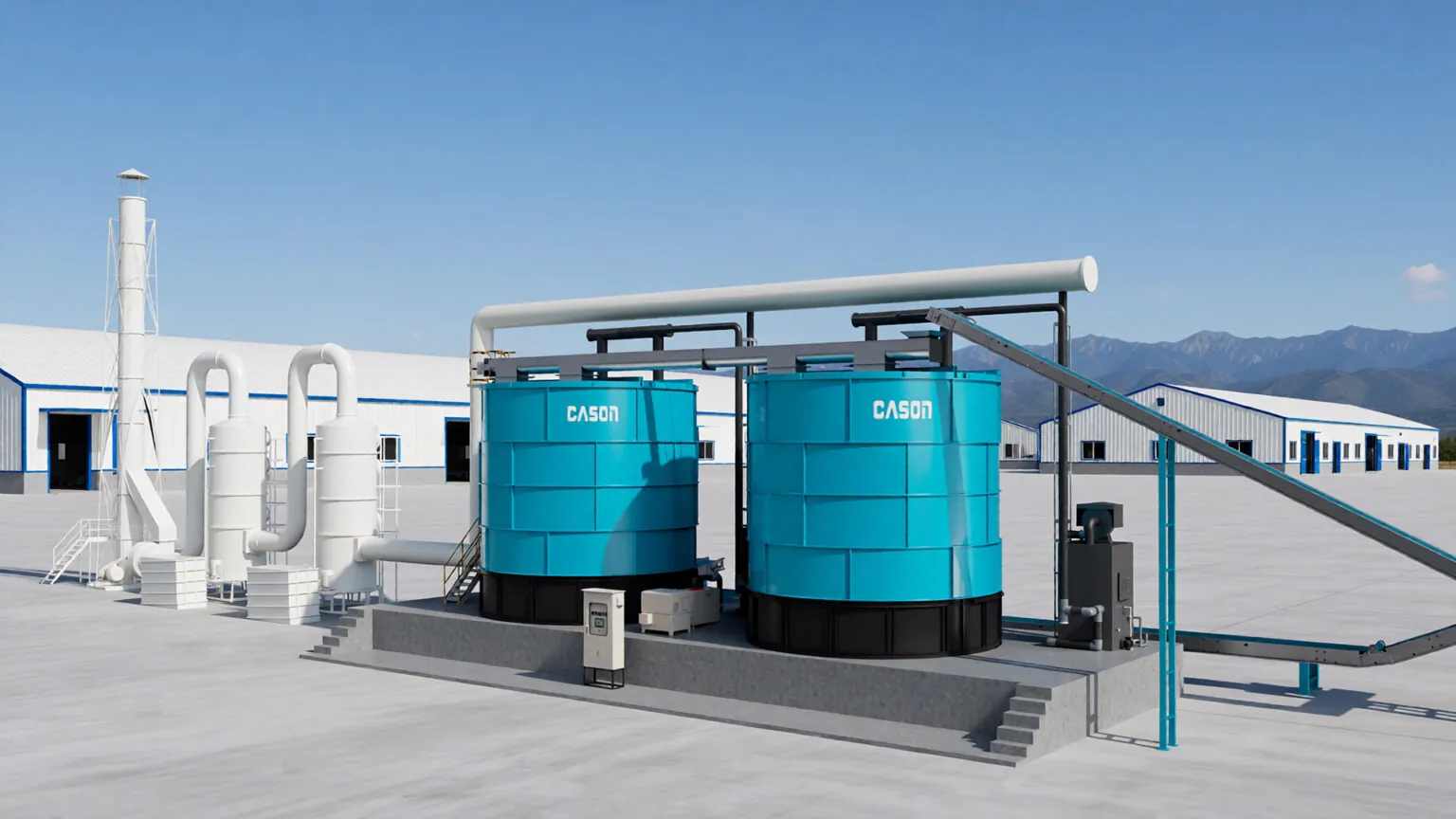
At Cason, we design waste treatment systems that combine the functions of a poultry composting machine with the efficiency of a livestock fermentation tank. Our equipment supports centralized waste treatment for poultry, cattle, pig, and sheep farms while reducing labor requirements and environmental risks.
For example, systems such as the C-160E fermentation solution integrate automated feeding, mixing, aeration, and deodorization technology to process livestock manure efficiently. These systems help farms convert waste into organic fertilizer while maintaining cleaner and more regulated operations.
With increasing environmental regulations in agriculture, structured manure treatment is becoming essential. By adopting fermentation tanks and composting systems, farms can maintain compliance, reduce pollution, and support more sustainable livestock production.