
Industrial composting systems operate under demanding conditions. A cow dung compost tank must handle moisture, microbial activity, heat, and corrosive substances generated during the decomposition of organic matter. For livestock farms processing large volumes of manure, the structural integrity of the tank directly affects system reliability and long-term operating costs.
A poultry composting machine or manure fermentation system typically maintains temperatures between 50 °C and 75 °C to accelerate microbial decomposition and eliminate pathogens. These conditions place continuous stress on internal components and tank surfaces. If materials are poorly selected, corrosion, deformation, or structural fatigue may occur, resulting in downtime and maintenance expenses. For this reason, industrial composting equipment manufacturers carefully select materials that support long-term operation in a high-temperature and high-moisture fermentation environment.
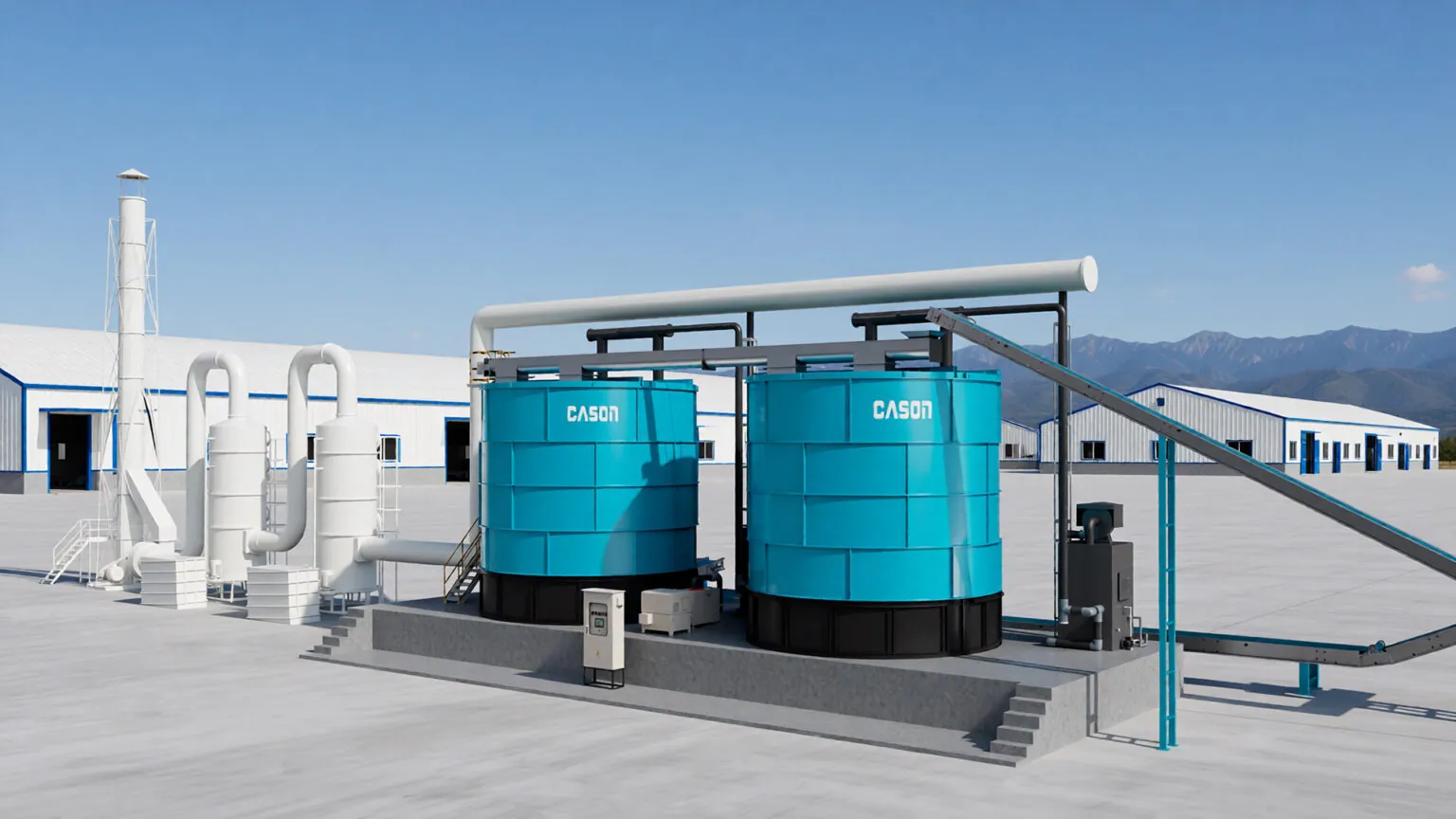
Stainless Steel for Corrosion Resistance
One of the most widely used materials in modern manure fermentation systems is stainless steel. During composting, cow dung releases organic acids, ammonia, and moisture, all of which can gradually degrade ordinary steel surfaces.
High-grade stainless steel offers several advantages for a cow dung compost tank. It provides excellent resistance to corrosion and chemical reactions during fermentation. The smooth surface also prevents residue accumulation, which helps maintain sanitation and improves cleaning efficiency.
In many industrial composting systems, the inner shell of the tank is constructed from stainless steel to ensure durability and stable operation even after years of exposure to organic waste. This material selection also contributes to consistent compost quality because the tank interior remains structurally stable throughout repeated fermentation cycles.
Structural Strength for Continuous Operation
Beyond corrosion resistance, the mechanical strength of the tank body is equally important. Compost tanks process large volumes of manure, and internal mixing systems continuously agitate the material to maintain oxygen supply for aerobic fermentation.
These mixing systems create mechanical loads that require strong structural materials. Reinforced steel frames, heavy-duty shafts, and durable mixing blades ensure that the equipment can operate continuously without structural deformation. Reliable materials also allow the fermentation tank to withstand constant rotation, vibration, and thermal expansion during operation.
When the tank structure is built with industrial-grade materials, composting operations remain stable even under intensive daily use. This durability reduces equipment replacement frequency and supports long-term farm productivity.
Heat Resistance and Stable Fermentation
Temperature management is essential in manure composting. Microbial activity naturally raises the temperature inside the tank, often exceeding 60 °C during active fermentation.
Materials used in a poultry composting machine or cow manure fermentation system must therefore tolerate repeated heating and cooling cycles. Heat-resistant materials prevent structural fatigue and maintain safe operation during long fermentation processes.
Proper insulation and durable metal structures also help retain heat within the tank, allowing microorganisms to remain active and speeding up the composting cycle. Efficient heat retention contributes to faster waste treatment and improved conversion of manure into nutrient-rich organic fertilizer.
Supporting Reliable Waste Management with Cason
Material selection is one of the foundations of reliable composting equipment. A well-designed cow dung compost tank must combine corrosion resistance, mechanical strength, and heat stability to ensure consistent performance in demanding agricultural environments.
At Cason, these principles guide the design of our composting systems. Our equipment integrates durable materials, automated control systems, and enclosed fermentation technology to support efficient treatment of livestock and poultry waste. The system includes mixing, ventilation, and intelligent monitoring to maintain stable composting conditions and improve resource utilization.
For farms seeking efficient manure management, the Cason C-160E offers a practical solution. This model supports centralized organic waste treatment, energy-efficient operation, and automated control, helping farms convert livestock waste into valuable organic fertilizer while maintaining stable long-term performance.