
Organic waste management has become an important topic for farms, food processing plants, and agricultural enterprises. As more organizations adopt sustainable practices, the demand for a reliable commercial compost machine continues to grow. However, not all systems perform the same. When evaluating a compost machine commercial model, two factors often determine long-term performance: processing capacity and operational efficiency. Understanding how these two elements interact helps businesses choose equipment that matches their waste volume, site conditions, and productivity goals.
Understanding Capacity in Commercial Compost Systems
Capacity refers to the amount of organic material a compost machine can process within a specific period, usually measured per day. Different commercial models are designed for different scales of operation.
Small- and mid-scale compost machines may process between 80 kg and 300 kg of organic waste per day, making them suitable for restaurants, schools, or small farms. Larger commercial systems can handle hundreds of kilograms or even several tons of waste daily, supporting industrial agriculture or municipal waste programs.
The right capacity depends on waste generation patterns. A farm producing large volumes of manure requires a much higher throughput than a food processing facility that manages smaller but steady waste streams. Oversized equipment may increase energy consumption and installation costs, while undersized equipment may slow waste treatment and disrupt operations.
At Cason, we emphasize capacity planning that aligns with real operational needs. A well-matched composting system ensures that organic waste can be processed continuously without unnecessary downtime.
Efficiency Factors That Influence Performance
Efficiency is not only about how fast waste decomposes. It also includes energy consumption, automation, odor control, and the stability of the fermentation process.
Modern compost systems rely on controlled aerobic fermentation. Inside the machine, organic waste is continuously mixed while air circulation supports microbial activity. Under regulated temperatures, microorganisms break down organic matter rapidly, turning waste into stable compost.
Many advanced compost machines also incorporate intelligent monitoring. Sensors track parameters such as temperature and airflow, allowing the system to adjust automatically and maintain ideal fermentation conditions. This improves decomposition speed and ensures consistent compost quality.
Efficient systems also reduce the volume of waste significantly. In many cases, the overall mass of organic waste can be reduced by around 80 to 90 percent after treatment, lowering disposal costs and transportation needs.
These features allow businesses to manage organic waste with fewer labor requirements and predictable operational costs.
Matching Capacity and Efficiency for Practical Use
Choosing the right compost machine commercial model requires balancing both capacity and efficiency. A high-capacity machine with poor energy performance may increase operational costs, while a smaller but efficient system may struggle to keep up with daily waste volume.
For agricultural operations and organic fertilizer production, enclosed composting systems are often preferred because they provide stable temperature control, consistent mixing, and better odor management. These characteristics help maintain reliable fermentation cycles even when processing large volumes of organic material.
This balance between throughput and energy optimization is especially important for facilities that operate continuously throughout the year.
A Practical Solution for Scalable Composting
At Cason, we focus on building compost equipment that combines strong processing capacity with stable operating efficiency. Our systems are designed for agricultural waste treatment, livestock manure management, and organic fertilizer production.
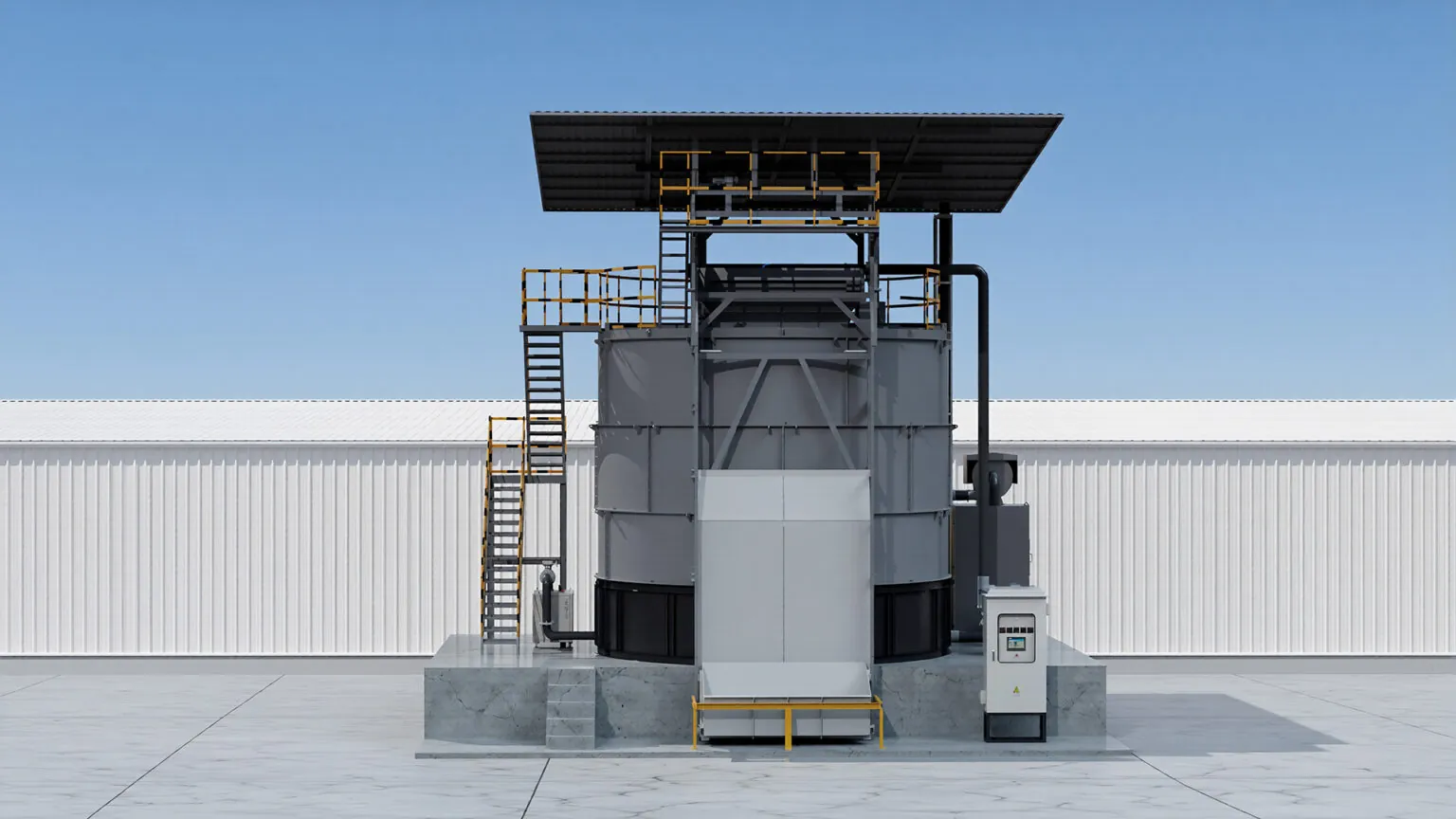
For operations seeking a dependable commercial solution, the Cason C-120E offers a practical option. The machine supports steady organic waste processing while maintaining controlled fermentation conditions. With automated mixing, temperature monitoring, and durable structural components, the C-120E helps farms and agricultural facilities convert organic waste into useful fertilizer while maintaining consistent daily output.
By choosing a system that balances capacity and efficiency, businesses can turn organic waste management into a productive and environmentally responsible process.