
Organic waste processing has become an essential focus for businesses, municipalities, and facilities aiming to improve sustainability and compliance. At Cason, we work with clients evaluating different composting technologies to find the right method for their operational needs. Two frequently considered approaches are in-vessel composting and aerated static pile composting. Both methods manage organic material in controlled environments, but they differ in key technical aspects, performance characteristics, and site requirements. Understanding these distinctions helps organizations make informed decisions based on throughput, environmental conditions, and labor considerations.
Process Control and Environmental Conditions
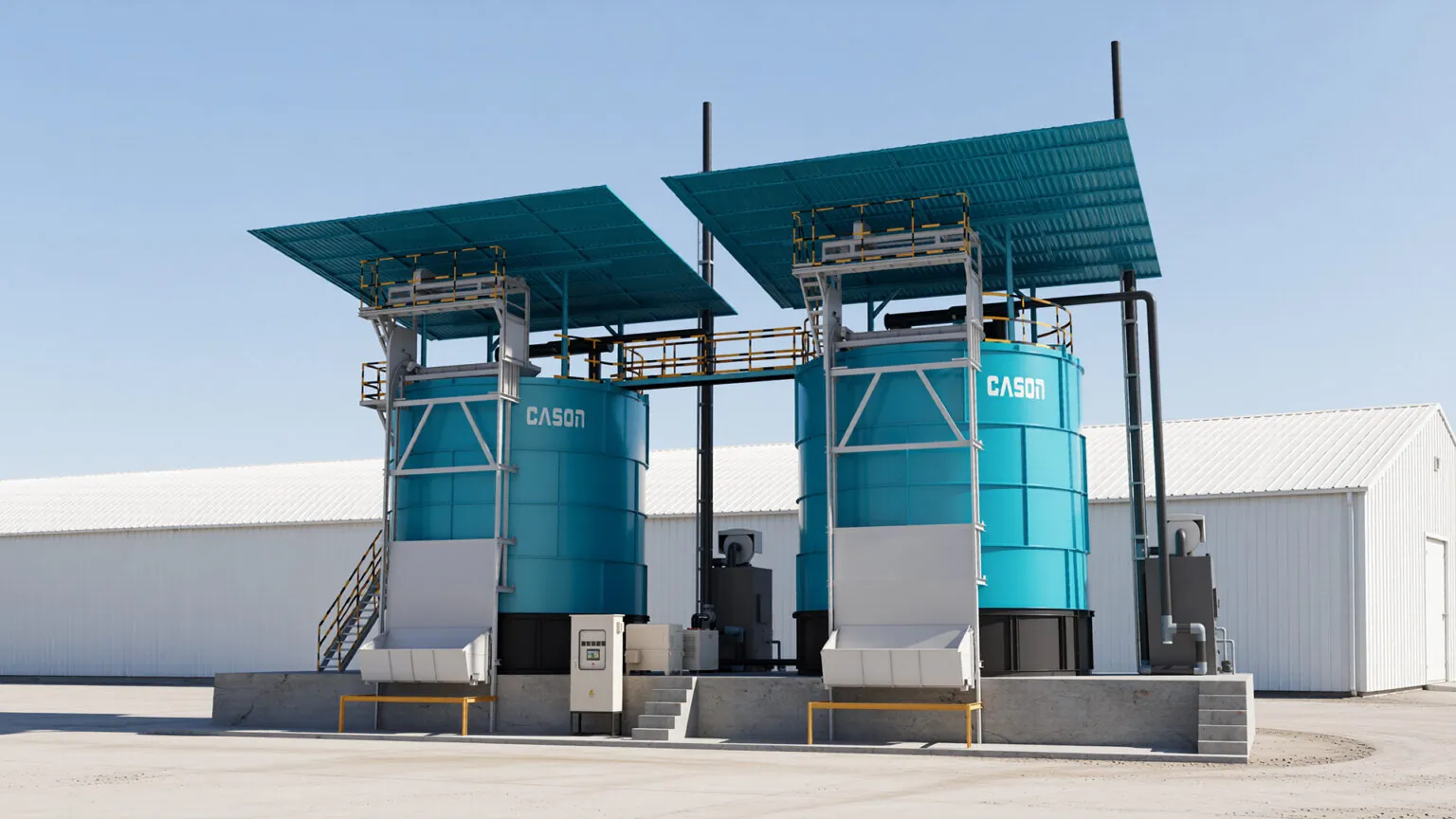
A defining characteristic of in-vessel composting is the high level of environmental control it offers. In this method, organic waste is enclosed within a vessel, tunnel, or reactor where temperature, moisture, and airflow can be closely regulated. This containment allows for consistent aerobic conditions throughout the composting cycle, resulting in a uniform decomposition process.
Aerated static pile composting also promotes aerobic decomposition by supplying air through an array of perforated pipes beneath the compost. Fans move air into and through the pile, supporting microbial activity without turning. While this approach reduces the need for mechanical turning, ambient weather conditions influence the pile more directly compared to in-vessel systems. Wind, rain, and temperature swings can affect aeration efficiency and moisture balance.
At Cason, we recognize that operators who require precise control over the composting environment often find in-vessel composting aligns with their performance expectations. Our systems, such as the DT-320E, are engineered to maintain stable conditions that support microbial activity while minimizing external impacts.
Footprint and Space Requirements
Space efficiency is another important consideration. In-vessel composting systems are compact and designed to make the most of limited floor area. The enclosed design enables vertical or modular configurations that serve high throughput in a reduced footprint. This is especially relevant for urban facilities or sites with strict zoning limitations.
Aerated static piles generally require more horizontal space because the system consists of open piles arranged over a diffuse aeration network. Facilities must allocate sufficient area for multiple piles and access routes for equipment. When land availability is not constrained, this approach can handle large volumes with relatively simple infrastructure.
Operational Labor and Management
Operational considerations include labor intensity and management protocols. In-vessel composting systems typically integrate automated controls that regulate airflow, temperature, and cycle timing. Once parameters are set, the system maintains conditions with minimal intervention, reducing daily labor demands.
In contrast, aerated static piles often require more hands-on monitoring. Operators check moisture content, adjust pile size and structure, and manage aeration schedules manually. While mechanical turning is not necessary, operators still need to assess material conditions and make adjustments to sustain aerobic conditions.
Odor Control and Regulatory Compliance
Odor management and regulatory compliance are central to many projects. In-vessel composting’s enclosed structure helps contain emissions, allowing for integration of odor control systems within the vessel. This containment can simplify permitting processes in regions with strict air quality standards.
Aerated static pile systems can be designed with biofilters or enclosed areas, but odors may be more difficult to contain due to the open nature of the piles. Facilities must consider buffer zones and additional mitigation strategies.
Making the Right Choice
Evaluating in-vessel composting against aerated static pile techniques involves weighing control needs, available space, labor resources, and regulatory requirements. At Cason, we support organizations in evaluating these factors and selecting solutions that match operational goals. Our DT-320E in-vessel composter offers a compact footprint, precise environmental control, and efficient throughput, making it an ideal choice for facilities seeking consistent, high-quality compost production.