
As organic waste management becomes a priority for agriculture, food processing, and municipal facilities, many operations face the challenge of scaling compost production while maintaining efficiency and environmental compliance. Manual composting methods often require large areas, extensive labor, and long processing cycles. An automated commercial compost machine offers a practical path to expand production capacity without significantly increasing operational complexity. By using a compost machine industrial system, organizations can process larger volumes of organic waste while maintaining consistent fermentation conditions. With automation, controlled aeration, and real-time monitoring, compost production becomes more predictable and scalable.
Why Traditional Composting Struggles to Scale
Conventional compost piles or windrow systems rely heavily on manual turning, environmental conditions, and available land. As waste volume grows, these methods encounter several limitations.
Processing time becomes difficult to control because microbial activity depends on temperature, oxygen levels, and moisture balance. Without consistent monitoring, composting cycles can extend for months. Large piles also increase odor management challenges and require additional labor for turning and material handling.
Industrial composting equipment addresses these issues by maintaining controlled fermentation conditions inside a closed system. Aeration, temperature, and mixing can be regulated automatically, allowing composting to proceed efficiently and consistently.
How an Automated Compost Machine Industrially Supports Growth
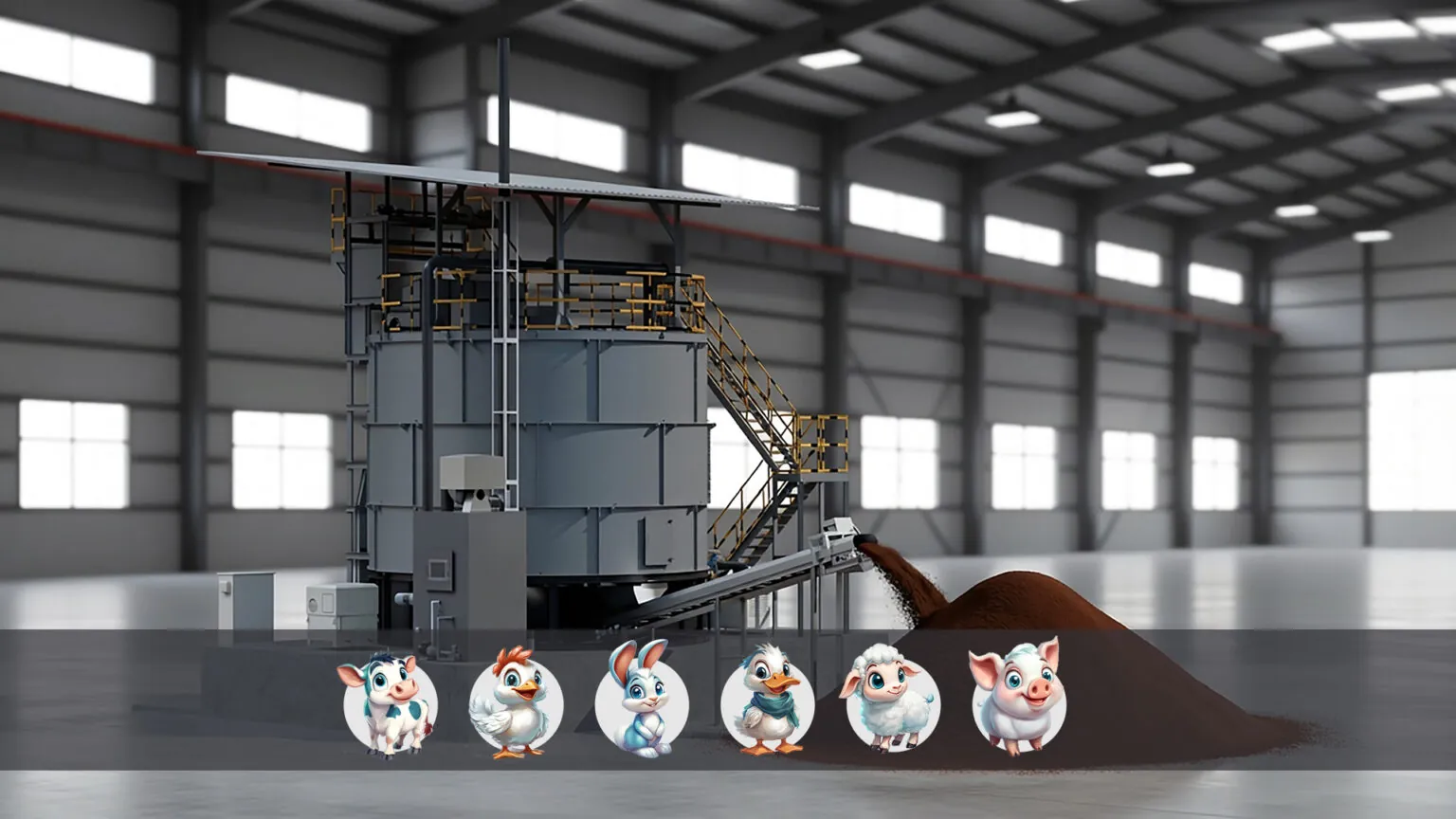
An automated compost machine industrial system integrates mechanical mixing, heating, and ventilation to accelerate microbial decomposition. Organic waste is loaded into the composting chamber, where a mixing system continuously blends materials while airflow maintains aerobic conditions.
In many systems, temperature is carefully regulated to support microbial activity and pathogen reduction. During the fermentation process, temperatures can reach 65-75°C, helping eliminate harmful bacteria while supporting efficient decomposition.
Automation also reduces manual involvement. Sensors monitor key parameters such as temperature, humidity, and oxygen levels, while a control system adjusts operating conditions in real time. This controlled environment allows facilities to maintain stable composting cycles regardless of external weather conditions.
Another important advantage is waste volume reduction. Many industrial composting systems can reduce organic waste volume significantly during processing, making material handling and storage more manageable.
Operational Efficiency and Process Consistency
Scaling production requires more than just larger equipment. Consistency and process management are equally important. Automated composting systems allow operators to monitor production data, adjust parameters remotely, and maintain stable fermentation conditions.
Industrial machines often incorporate PLC-based control systems and touch screen interfaces that simplify operation and monitoring. High-quality components and corrosion-resistant materials help maintain reliable long-term performance in demanding environments.
In addition, integrated deodorization systems help manage odors and improve environmental compliance. This is particularly important for composting facilities located near urban areas or food processing plants.
By reducing labor requirements and improving process control, automated systems allow facilities to increase output without proportional increases in operational costs.
Scaling Compost Production with Cason
For organizations seeking to expand compost production, choosing the right equipment is critical. Cason provides automated composting equipment designed to support efficient organic waste treatment and fertilizer production.
The Cason C-120E commercial compost machine offers a practical solution for industrial composting operations. Its automated fermentation system helps maintain stable temperature, aeration, and mixing conditions, enabling reliable large-scale compost production. With integrated control systems and durable construction, it supports continuous processing while reducing manual labor requirements.
For facilities aiming to transform organic waste into valuable fertilizer while expanding production capacity, the Cason C-120E provides a structured and efficient approach to industrial composting.