
Choosing between commercially compostable materials and traditional plastics is not a matter of tracking environmental trends; it is a calculation of facility processing capability. For large-scale agricultural operations, industrial bioplastics are not automatically superior to standard polymers. Traditional plastics remain indispensable for strict biosecurity segregation, transport liners, and moisture barriers. The operational breakdown occurs when non-biodegradable plastics contaminate organic waste streams, or conversely, when compostable materials are introduced without the proper infrastructure to process them. Ultimately, a material is only as sustainable as the system available to treat it at the end of its life cycle.
The True Processing Demands of Industrial Bioplastics
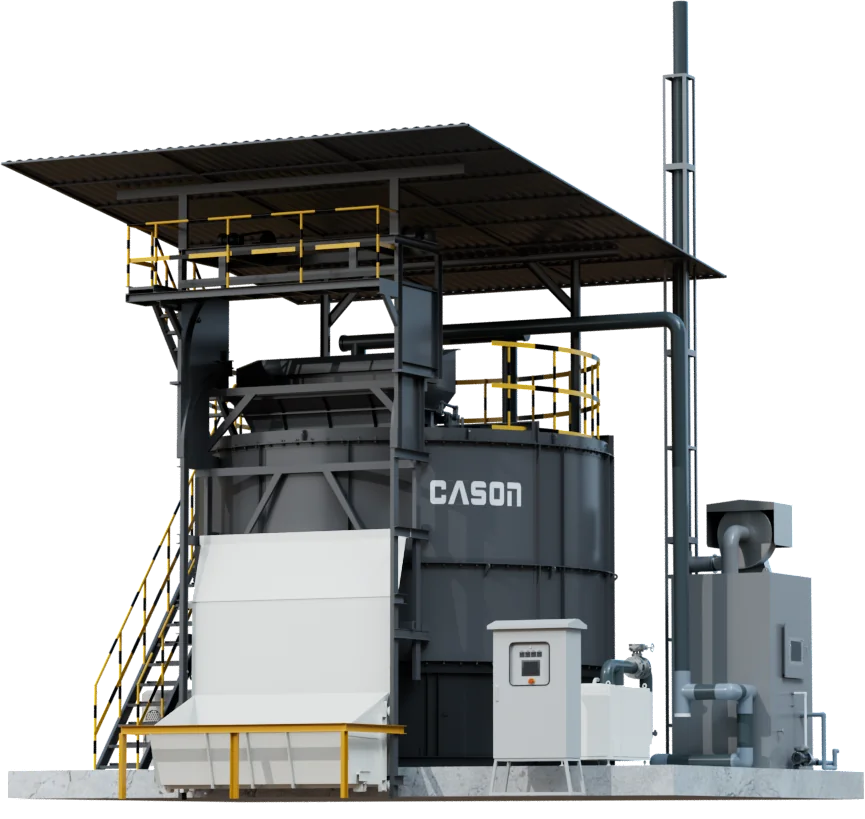
Commercially compostable items are engineered to degrade exclusively within specialized, high-temperature aerobic processing environments. Unlike traditional food waste or crop residues, these advanced polymers will not break down in passive home piles or standard soil applications, often remaining intact and causing significant operational bottlenecks. Through our intensive manufacturing focus at CASON, we develop waste systems designed to overcome these structural resistances. By maintaining an engineered environment that optimizes oxygen distribution, moisture retention, and mechanical breakdown, our machinery ensures that these durable compostable substrates undergo complete thermophilic stabilization within a predictable commercial timeline.
Selecting a High-Performance System for Diverse Waste Profiles
Investing in a heavy-duty compost machine industrial requires a thorough analysis of raw material characteristics rather than standard catalog specifications. Livestock operations regularly deal with complex mixtures of high-nitrogen manure, carbon-heavy bedding, and potential bioplastic packaging inputs, all of which exhibit radically different bulk densities and moisture levels. A truly effective system must stabilize these volatile variables through continuous forced-air aeration and heavy-duty internal mixing mechanisms. This robust structural control prevents the dense, wet mass from compacting and dropping into a foul, inefficient anaerobic state, allowing facility operators to maintain high throughput and consistent output quality.
Structural Engineering and Agricultural Infrastructure Alignment
Integrating an industrial-grade commercial compost machine into an active farming setup involves extensive mechanical and civil planning long before the equipment arrives on-site. Engineering procurement teams must carefully map out structural concrete foundation capacities, three-phase electrical connections, localized drainage routing, and unhindered clearance for heavy loading machinery. Through our specialized ODM and OEM manufacturing services, we focus on customizing these physical connection points to seamlessly match a facility’s unique layout and daily processing volumes. Addressing these spatial boundaries early prevents logistical friction and guarantees that the system operates as a core asset within the daily farm workflow.
Post-Commissioning Standards and B2B Procurement Discipline
Securing the long-term profitability of an organic waste infrastructure project depends on a disciplined approach to post-installation support and technical clarity. For B2B project managers, ensuring continuous operational uptime requires access to comprehensive preventative maintenance manuals, detailed operator training programs, and transparent wear-parts supply networks. When we engage in custom OEM or original design engineering consultations, we prioritize establishing clear written agreements regarding a partner’s primary waste profiles, regional electrical compliance codes, and local climate challenges. This documentation-first strategy guarantees that the final manufactured machinery delivers reliable, compliant, and highly repeatable performance over its entire operational lifespan.