
Investing in waste processing infrastructure is fundamentally an investment in process control rather than just equipment hardware. When we collaborate with commercial agricultural enterprises, we emphasize that a compost machine functions as a highly regulated biological environment designed to optimize the natural life cycle of aerobic microorganisms. For modern livestock facilities, managing consistent volume throughput requires moving away from traditional, unpredictable open-pile decomposition. By stabilizing critical variables like oxygen flow, moisture retention, and mechanical agitation, industrial systems allow commercial operations to accelerate waste transformation while maintaining strict environmental compliance.
The Biological Mechanism of Accelerated Aerobic Decomposition
The core function of a composting system relies on sustaining a thriving community of thermophilic bacteria that break down complex organic matter. Raw agricultural waste possesses abundant nutrients, but without active aeration, it quickly packs down, depletes available oxygen, and shifts into a foul-smelling anaerobic state. Through our manufacturing developments at CASON, we engineer solutions that incorporate continuous forced-air injection and structured internal mixing. This steady introduction of oxygen allows beneficial microbes to rapidly metabolize carbon and nitrogen, generating natural biological heat that eliminates pathogens and weed seeds far faster than conventional open-air windrows.
Structural Phases and Material Transformation Within the Vessel
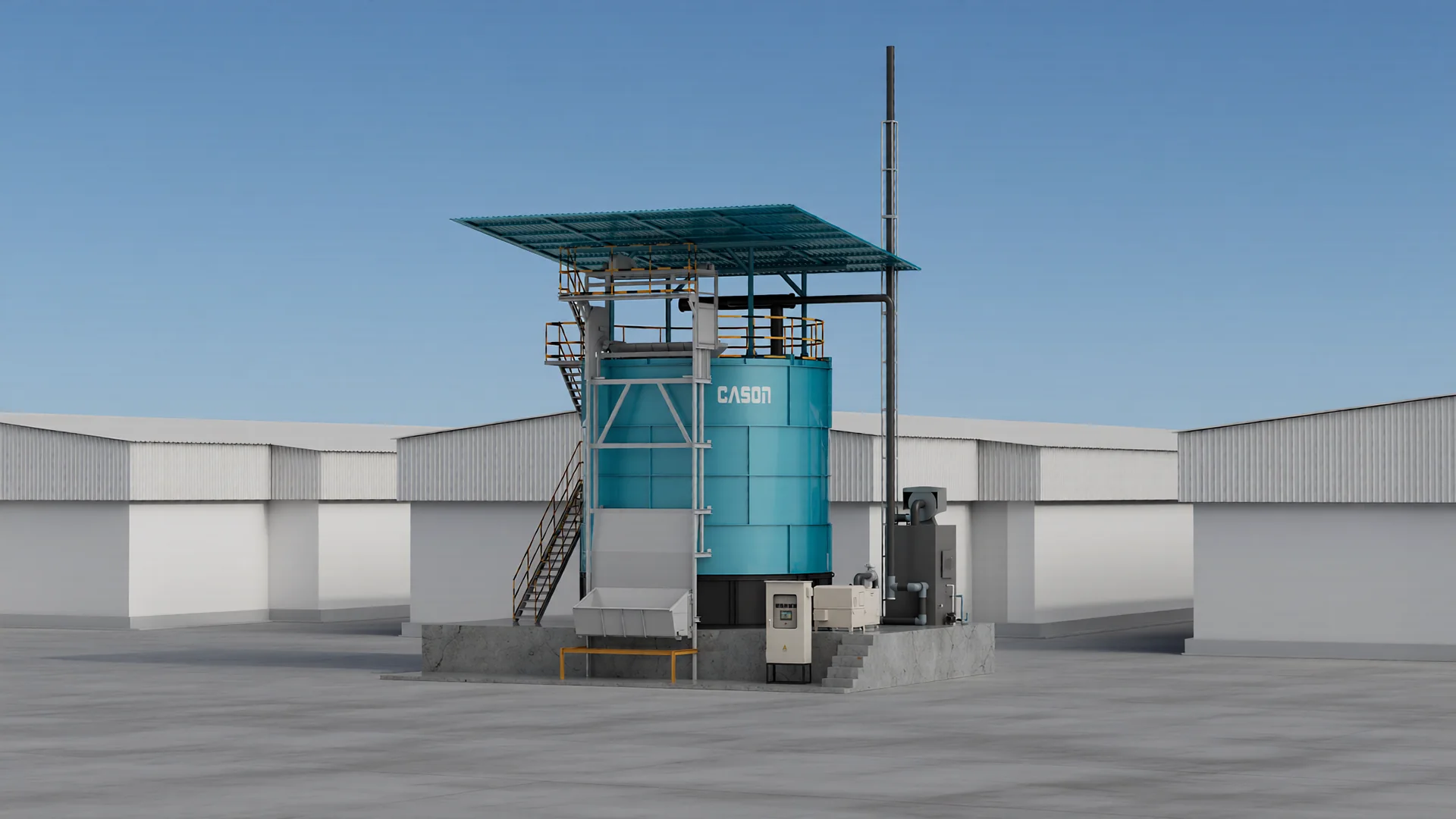
Inside a heavy-duty poultry composting machine, the processing cycle follows a highly structured sequence divided into loading, active thermophilic stabilization, and controlled discharge. Once raw material enters the chamber, automated systems monitor and maintain internal temperatures between 55°C and 65°C, which is the optimal range for rapid organic degradation. Rather than relying on external heating elements, the system retains the heat naturally produced by microbial metabolism through specialized insulated vessel walls. This sustained thermal environment ensures that by the time the material moves toward the discharge phase, it has transformed into a stable, odor-free, and nutrient-rich organic base ready for final curing or commercial blending.
Engineering Integration and Site Layout Coordination
Successfully deploying an industrial livestock fermentation tank requires comprehensive technical planning long before the equipment arrives at the facility. Engineering teams must evaluate how the system interfaces with existing farm infrastructure, including concrete foundation load capacities, three-phase electrical access, upstream loading conveyors, and downstream material handling routes. Our customized ODM and OEM production workflows focus on tailoring these exact structural touchpoints to match a site’s specific daily waste volume and regional climate challenges. This proactive, engineering-first approach eliminates installation bottlenecks and ensures the machinery integrates smoothly into the factory’s daily operational flow.
Procurement Standards and Long-Term Operational Support
Acquiring industrial-grade waste management systems requires a disciplined evaluation of technical specifications and post-commissioning service structures. For B2B procurement managers, operational success depends heavily on clear preventative maintenance protocols, accessible wear-parts documentation, and robust operator training programs. During our initial custom engineering consultations, we encourage partners to establish clear baselines regarding their specific material characteristics, local electrical codes, and automation expectations. Securing these written technical parameters early in the project design phase ensures the final manufacturing configuration delivers reliable, repeatable, and fully compliant performance across years of continuous operation.