
For B2B procurement teams and facility managers, the phrase “commercially compostable” represents a strict operational standard rather than a casual environmental label. Unlike backyard organic waste, certified commercially compostable packaging, food-service ware, and organic liners require specific engineered environments to degrade fully and safely. Managing these material streams efficiently demands moving away from passive open piles toward highly regulated processing systems that can sustain the precise thermophilic temperatures and moisture balances required for polymer breakdown. By integrating dedicated processing systems into an institutional waste strategy, commercial facilities can systematically close the loop on organic waste while meeting stringent environmental compliance codes.
The Technical Reality of Commercial Composting Standards
A material designated as commercially compostable is engineered to break down into nutrient-rich soil amendments only within a highly managed, high-temperature aerobic environment. Raw bioplastics and heavy organic residues resist decomposition in standard soil or low-temperature home setups, which frequently leads to site contamination. Through our engineering developments at CASON, we address this challenge by manufacturing systems that maintain an optimal thermodynamic environment. Our designs accelerate the aerobic biological process by combining continuous mechanical agitation with forced-air oxygenation, ensuring that even complex, certified compostable substrates are broken down completely and uniformly within a defined operational cycle.
Incorporating High-Capacity Processing into Institutional Workflows
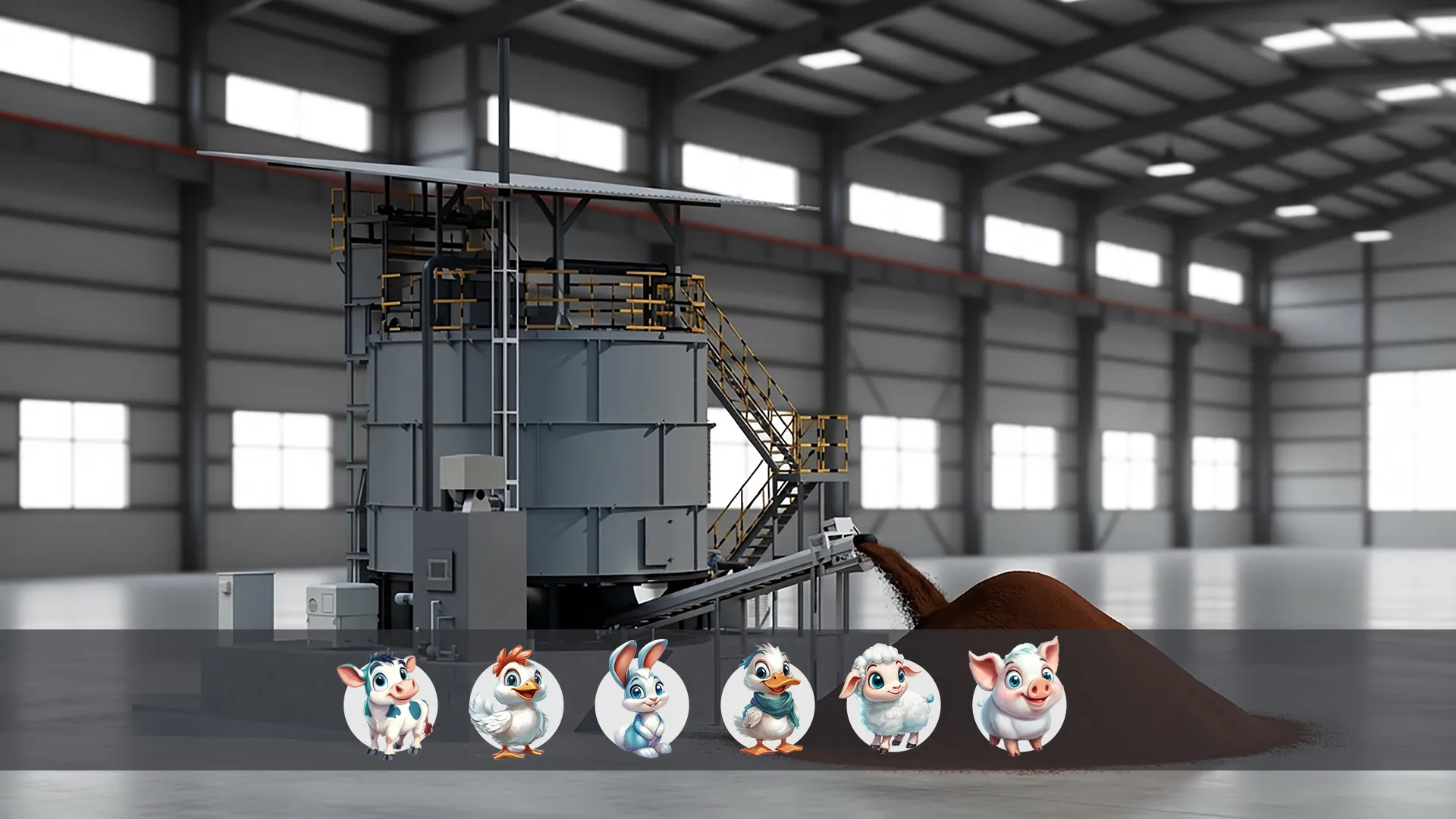
Deploying an industrial-grade commercial compost machine becomes highly advantageous for facilities handling continuous waste streams from corporate canteens, agricultural packaging, or large-scale food processing plants. Processing these diverse inputs within an enclosed in-vessel system drastically reduces the total land area required compared to open windrow farming, while providing total isolation from localized pest and odor issues. This structural containment allows facilities to localize their organic waste treatment right at the point of collection. For procurement teams, evaluating this equipment involves analyzing the complete material flow, ensuring upstream sorting practices properly isolate non-compostable contaminants before they enter the processing chamber.
Engineering Integration and Site Layout Specifications
Successfully integrating an industrial compost machine commercial setup requires comprehensive technical coordination during the initial infrastructure planning stages. Engineering procurement teams must carefully evaluate critical spatial interfaces, including three-phase electrical connections, structural concrete slab loading capacities, building ventilation dynamics, and raw material loading clearances. Through our specialized ODM and OEM services, we focus on tailoring these technical parameters to match a facility’s unique daily throughput demands and local utility regulations. Resolving these physical and mechanical boundaries prior to equipment delivery eliminates installation friction and guarantees seamless integration into the facility’s daily logistics layout.
Technical Evaluation Standards and B2B Procurement Discipline
Investing in robust organic waste infrastructure requires a disciplined review of certified technical performance data and comprehensive post-installation service structures. For B2B project managers, securing reliable operational uptime depends on the availability of transparent preventative maintenance protocols, detailed operator training programs, and structured spare-parts supply lines. When we enter custom engineering or OEM manufacturing discussions, we prioritize establishing precise baselines regarding a partner’s primary waste characteristics, local electrical compliance codes, and automation expectations. Securing these technical agreements early in the project design phase ensures the final manufactured asset delivers dependable, repeatable, and fully compliant waste processing performance over years of continuous operation.