
Organic waste sits at the heart of many environmental issues faced by businesses today. When food scraps, animal manure, and other biodegradable materials are sent to landfills, they decompose slowly, generating methane and other greenhouse gases that contribute to climate change. Meanwhile, traditional waste management approaches often incur high disposal costs and create odor and pest challenges. As organizations increasingly prioritize sustainability and operational efficiency, adopting a commercial compost machine has become an effective strategy to address these concerns at the source.
Tackling Waste Volume and Disposal Costs
For many companies, handling organic waste means regular pickups and landfill fees that quickly add up. A commercial composting machine enables on-site processing, converting organic waste into valuable compost instead of sending it to the landfill. This can drastically reduce the volume of waste that needs external disposal, lowering associated transport and tipping fees. On-site composting also cuts down on the labor and logistical efforts typically involved in waste management, freeing up resources for other productive operations.
Through aerobic microbial activity under controlled conditions, such machines accelerate decomposition, producing nutrient-rich compost in a fraction of the time required by traditional methods. This transformation not only keeps valuable organic matter out of landfills but also creates a product that can be used in agriculture or landscaping, closing the loop between waste generation and resource reuse.
Improving Environmental Performance and Compliance
Organic waste is a major source of methane emissions when left to decompose anaerobically in landfills. By processing this waste through high-temperature aerobic composting, businesses can significantly reduce the release of harmful greenhouse gases and meet more stringent environmental regulations. On-site composting also helps control odors and pests that are common around conventional waste bins, improving workplace conditions and minimizing impact on surrounding communities.
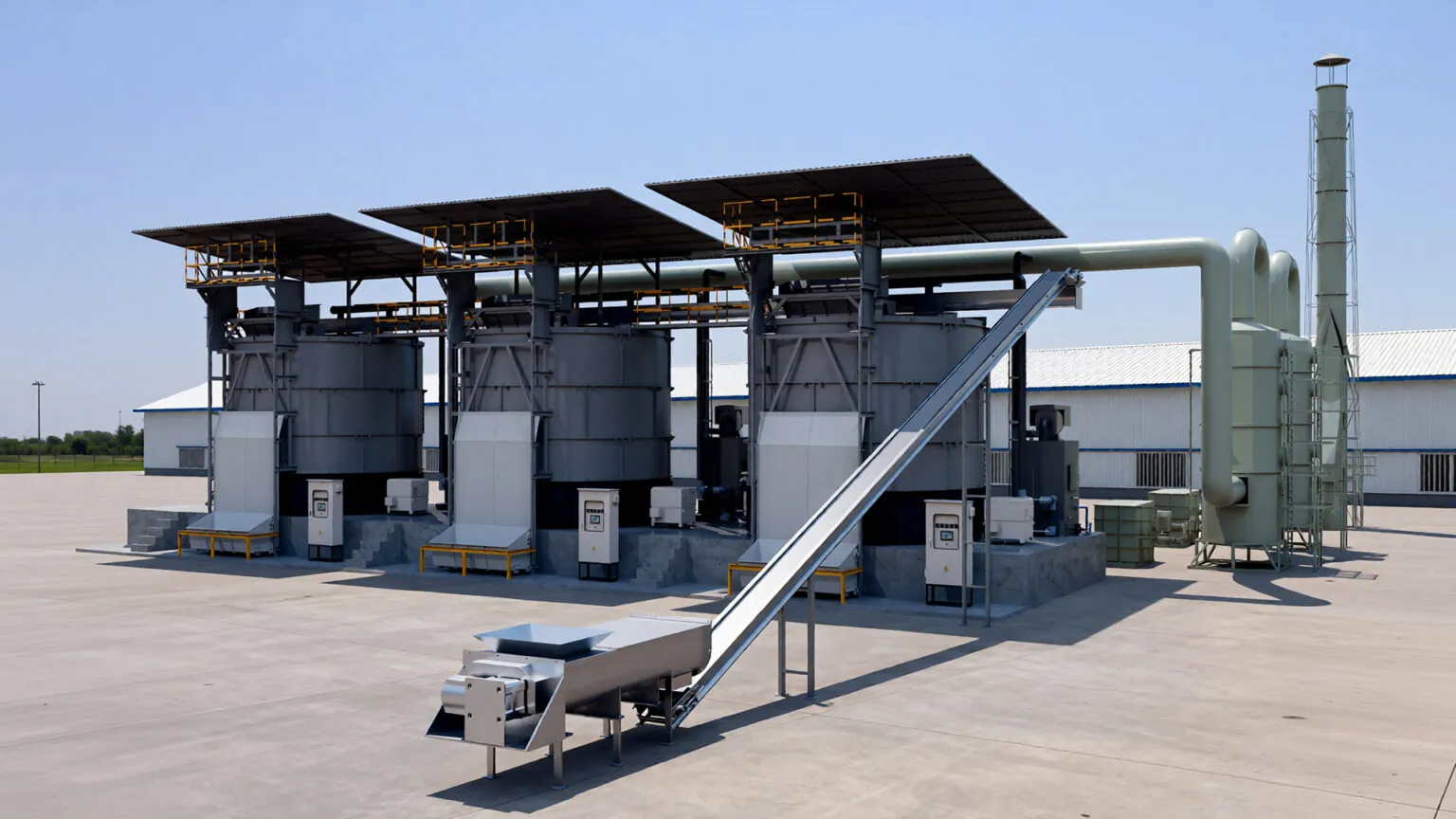
The commercial compost machine from Cason, such as the C-120E model, exemplifies this approach. Designed with energy-saving systems, remote conveying, and centralized deodorization, the C-120E enhances operational efficiency while supporting environmental goals through reduced energy use and improved air quality. Its intelligent control system also simplifies management and helps businesses stay aligned with sustainability targets.
Turning Challenges into Opportunities
Beyond environmental benefits, commercial composting machines can also strengthen a company’s sustainability credentials. As consumers and stakeholders alike demand greener practices, demonstrating responsible waste handling has real value. Using a solution like Cason‘s commercial composting machine positions organizations to contribute meaningfully to circular economy initiatives, turning waste into a resource rather than a burden.
Embracing commercial composting is more than a waste management choice; it’s a strategic step toward operational sustainability, reduced environmental impact, and long-term cost savings.