
When evaluating solutions for organic waste management, businesses often face the choice between OWC composting machines and anaerobic digestion systems. Each method has distinct advantages and applications, making it crucial to understand their differences to choose the right solution for your operation.
The Basics of Organic Waste Management
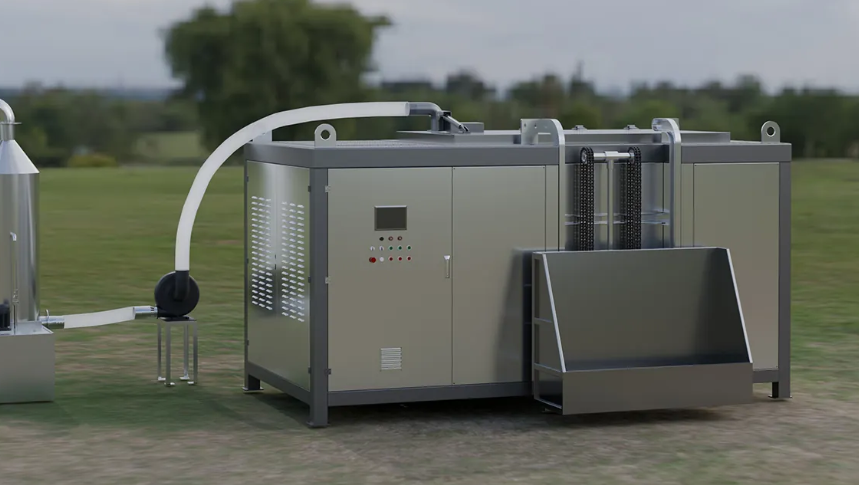
Organic waste composting machines (OWC) like Cason’s CF-1000 Poultry and Livestock High-Temperature Harmless Treatment System focus on aerobic decomposition. This process involves microorganisms that thrive in the presence of oxygen, breaking down organic materials into rich compost. The CF-1000 model is specifically designed to handle poultry and livestock waste, featuring a mixing system for uniform blending and an intelligent control mechanism that regulates temperature, humidity, and oxygen levels. These features ensure rapid processing and high-quality compost production.
On the other hand, anaerobic digestion employs bacteria that operate without oxygen to break down organic matter, resulting in biogas—primarily methane—and digestate, which can be used as fertilizer. While both methods transform organic waste into valuable products, the processes and end results differ significantly.
Key Features of OWC Composting Machines
One of the primary benefits of using an organic waste composting machine is its ability to produce compost quickly. The CF-1000’s heating system maintains optimal temperatures for microbial activity, fostering rapid composting. Additionally, the machine’s degreasing system removes excess oil from organic waste, enhancing the efficiency of the composting process. With automated feeding and discharging systems, the machine minimizes manual handling, thus reducing labor costs and improving operational efficiency.
Moreover, the fan system provides consistent airflow, which is vital for aerobic fermentation. A deodorization tower further purifies exhaust gases, mitigating odors and ensuring a cleaner working environment. The combination of these components allows businesses to convert organic waste into usable compost in a relatively short period, making OWC systems a highly efficient solution for waste management.
Anaerobic Digestion: An Alternative Approach
While OWC composting machines excel at producing compost, anaerobic digestion offers different advantages. Primarily, the biogas generated can be used as renewable energy, providing an alternative source of fuel for farms and industries. However, anaerobic systems typically require more intricate setups, including digestion tanks and gas collection systems, which can demand significant capital investment and operational oversight.
Additionally, the digestate produced from anaerobic digestion often requires further processing to become a quality fertilizer, which may present additional challenges for some operations.
Choosing the Right Solution for Your Needs
At Cason, we believe in empowering businesses with the right tools for sustainable waste management. Our OWC composting machines, like the CF-1000, are engineered to deliver maximum efficiency and quality in compost production. By understanding the distinctions between OWC composting machines and anaerobic digestion, organizations can make informed decisions tailored to their specific waste management needs. We invite you to explore how our cutting-edge solutions can help enhance your organic waste processing and contribute to a more sustainable future.