
A farm can describe its manure as “wet” and still have three quite different feedstocks. Poultry litter may carry damp patches from drinker leaks. Scraped cattle manure can arrive with bedding. Flushed pig manure may move through a pipe as a slurry. Buying a separator for all three would be a poor starting point.
At Cason, we assess manure dewatering before composting as a feed preparation decision. The answer depends on the material that actually reaches the composter, how much arrives on a busy day, and whether the chosen equipment can accept a mixed feed while maintaining air space. Sometimes mechanical separation is useful. Sometimes dry bulking material and premixing solve the inlet problem. A farm with an already workable mix may need neither.
Start with the manure as collected
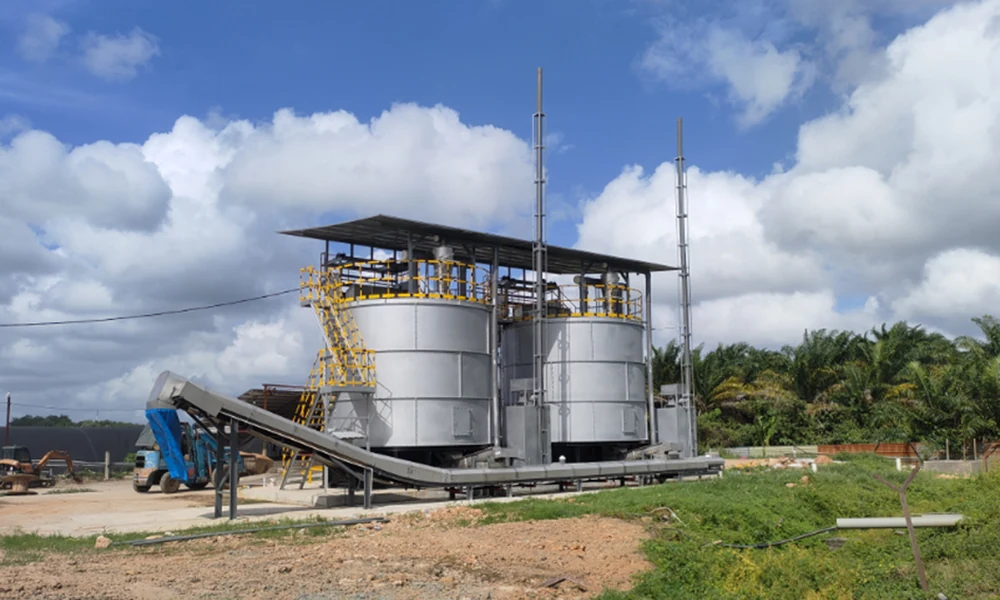
Take samples where manure actually leaves the barn, before anyone prepares a demonstration batch. A belt discharge, a scraper channel and a flushed pit can carry very different amounts of free water even on the same farm. We ask the operator which houses see drinker leaks, washdown or rainwater ingress, then sample an ordinary day and a wet one. Material skimmed from the dry top of a store is a poor basis for specifying a feeder.
The sample sheet needs a daily wet quantity, a clearly stated dry-solids test basis, bedding details and the largest likely lumps. We keep houses separate on that sheet until we know whether their streams will be combined. A press may be fed the whole slurry; a composting vessel may receive its cake alone or cake blended with other material. We size against the stream entering each machine, rather than carrying one average through both calculations.
Numbers cannot show everything the feeder has to handle. Tip a sample bucket: does liquid run out? Try the material in a small mixer: does it form wet balls, cling to the screw or stay open after mixing? Those observations tell us about handling and air movement through the composting mass. A moisture result still matters, but by itself it cannot decide whether this feed needs a separator.
When is separation worth testing?
We put separation on the trial list when the collected material runs as slurry, sheds free liquid, or would demand more dry bulking material than the farm can reliably supply. Pressing changes what the vessel receives, but it also sends liquid somewhere else. We ask the buyer to identify that destination at the same meeting where separator capacity is discussed.
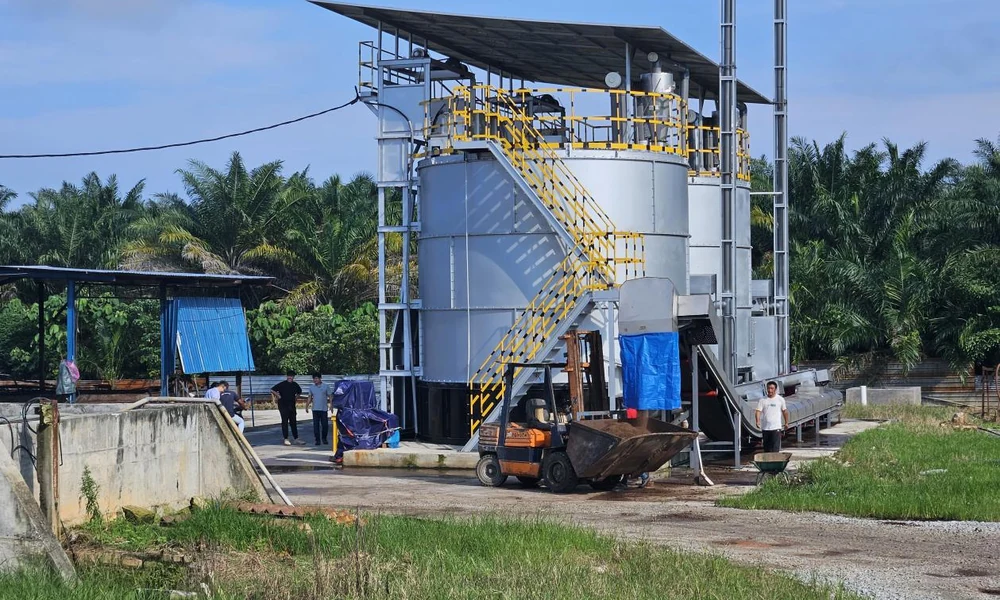
In our Dingli manure preparation project, dry and wet material are proportionally mixed, with a dry-wet separation bin and premixing ahead of measured transfer to fermentation tanks. That arrangement illustrates why feed preparation is designed for the farm’s material flow. It does not establish a separator requirement for other sites or a guaranteed cake moisture for every manure type.
Ask a separator supplier to test representative material, including bedding and grit. Record feed rate, solids capture, cake consistency, clogging and washdown needs. The feed pump, screens, screw or press, cake transfer and liquid tank must all work at the farm’s peak arrival rate, not only at an average rate on a quiet day.
If free water consumes vessel capacity, compare water removed with the separator’s added power, maintenance, labor and liquid storage.
When can bulking and premixing be enough?
Suppose scraped manure can already be lifted without leaving a pool under the loader. Before adding a press, we would try mixing a known quantity with the dry material the site really has: perhaps straw, bedding, wood-based material or suitable recycled compost. The trial has to show an even, open mix at the feeder, not just a drier-looking handful. We also check contamination, particle size and whether that bulking material belongs in the intended finished product.
Do the trial with the materials the farm can buy or recover all year. A small mixing test with dry sawdust proves little if the site can only obtain wetter crop residues in the rainy season. Calculate the amount of bulking material needed per day, its storage footprint, delivery frequency and effect on total feed volume. Adding enough dry material to make a mix workable can increase the tonnage the vessel must process.
Our cow manure moisture guidance discusses moisture management during fermentation. Here the purchasing question comes earlier: can the farm produce a repeatable inlet mix without mechanical separation? Check it in a trial, then confirm the vendor’s permitted feed window for that exact equipment and operating plan.
Compare the three preparation routes
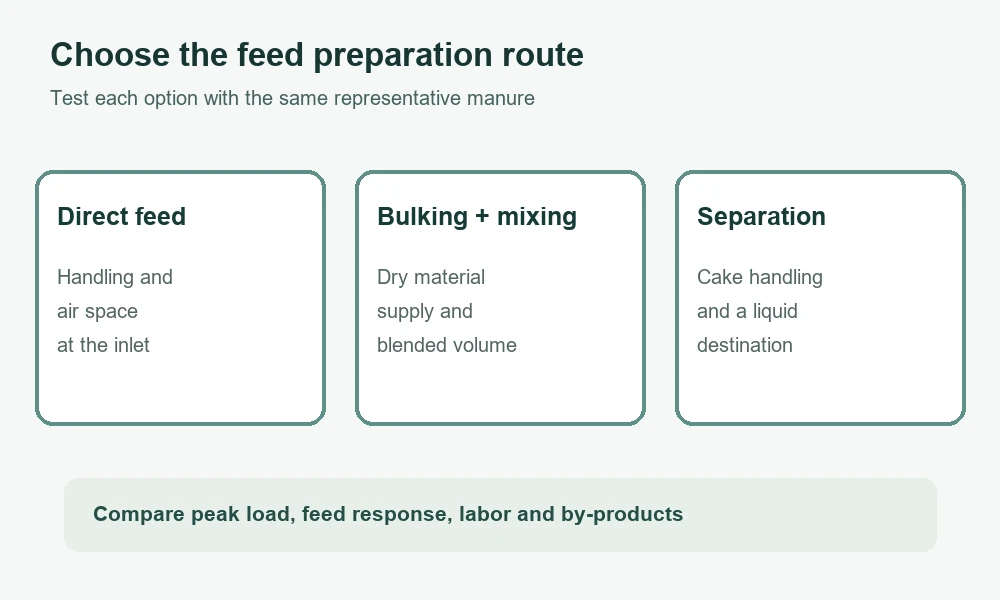
Put direct feed, bulking with premixing, and separation on one sheet. For each route, use the same manure samples and the same peak-day volume. A fair comparison records what enters the composter, what leaves feed preparation, and the added equipment or labor. We find these questions more useful than asking which route has the “best” moisture number.
- Direct feed:Does the as-collected material enter the hopper and remain porous enough for the selected aerobic process? What happens on the wettest routine day?
- Bulking and premixing:Is there a dependable dry material supply? Can the mixer distribute it without clumps, and does the larger blended volume still fit the treatment schedule?
- Mechanical separation:What cake does the real slurry produce? How will the farm transfer it, clean the separator and handle every litre of separated liquid?
One farm may therefore have two sensible answers. Litter scraped from a poultry house might go through mixing, while manure carried out by flushing may need a separation trial. Combining their measurements into a single “farm manure” figure would hide the difference the equipment supplier needs to see.
Account for the liquid stream
On the drawing, follow the separated liquid past the press. Where does it collect, and who checks that tank when the farm is at peak load? The stream may carry nutrients and fines, so its route has to fit local storage, treatment or land-use requirements. We ask for tank and pump capacities, the wet-weather route and an operator responsible for them. Otherwise the solids line can be ready while the liquid side stops the plant.
We also mark where washdown lands. Press filtrate, yard runoff and cleaning water may each need a different collection or control arrangement; a shared drain should never be assumed from a sketch. If a contractor is expected to collect liquid, its acceptance terms need checking while the layout is still being drawn.
The cake goes back into the mixing trial. Some cakes still compact and may need bulking before they can be fed evenly. We would not infer good aeration from the fact that a sample holds its shape: separation is preparation for composting, not the composting process itself.
Verify the composter feed window before buying
The selected model’s feed acceptance sheet is the place to settle the inlet question. We put the trial mixture beside its stated capacity conditions and check volume, particle size, bedding and loading schedule together. When we specify a manure composting machine from our manure composting equipment range, the sizing basis is that prepared mixture. A projected separator cake that has never been tested is not enough.
Trace one load from collection to the hopper. We look for spillage at the mixer or press, bridging during cake transfer and access for cleaning a screen or removing wrapped bedding. These details decide whether an operator can repeat the proposed route at the end of a long shift. A capacity calculation will not reveal a blocked handoff.
A moisture target copied from another manure type can mislead the purchase team. The vessel’s aeration and loading pattern, the bulking material and the intended output all affect the workable inlet. We confirm the current model documentation with the supplier and test the proposed mix against it.
What should the trial prove?
Run at least one trial with ordinary material and another with a credible wet or peak-load batch. We record the input volume and sample basis, any added dry material, separated cake and liquid volumes, observed handling behavior, and the composter’s feed response. If the material changes with season or housing, the trial should say which conditions it covers.
The decision should be written plainly: direct feed is acceptable under defined conditions, bulking and mixing are required, or separation is justified and the liquid route is ready. List the open tests before a purchase order is signed. This gives the buyer a basis for comparing quotations that may include very different preparation equipment.
If the route is still unclear, discuss the feedstock with us. A useful first exchange includes the collection method, representative dry-solids or moisture tests, normal and peak quantities, bedding, wash-water inputs, available bulking material and the liquid-handling sketch. With those in hand, we can identify which preparation route deserves a site trial before equipment is ordered.