
The morning round finds one dead animal in a back pen. The collection truck has already passed the area, and the next visit is uncertain. Feed is due through the front gate at noon. Three questions arrive together. Where will it wait? Who handles it? Does the collection lorry come through the feed gate?
The difficult part is often the wait. At Cason, we treat temporary carcass storage as part of the animal carcass disposal plan. We recommend a written arrangement for those awkward hours, not only a phone number for the collector.
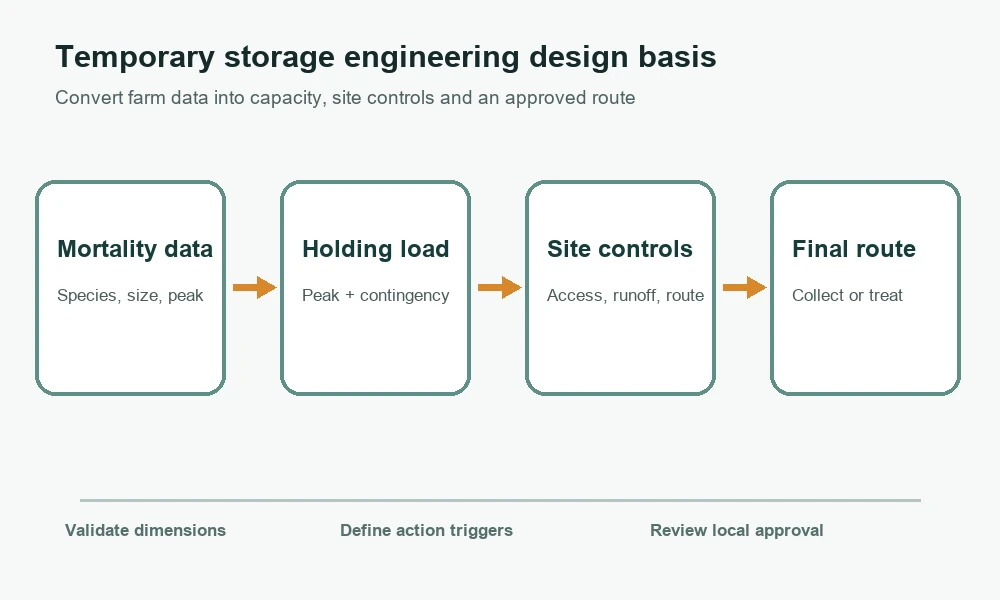
Build the holding load from farm records
We start with the mortality book, not a container catalogue. Separate the records by species, animal class and building. Find the largest carcass the team has moved and the weeks when deaths clustered. An average may help with annual cost, but it can hide the Sunday morning that fills the store.
Next, write down the normal pickup interval and a realistic delay. How much carcass mass could accumulate if a visit is missed, a road closes or a holiday changes the schedule? We use that peak between pickups, plus a locally agreed contingency, as the design holding load. There is no useful universal percentage. A remote cattle farm and a poultry site collected several times a week face different limits.
Weight is only the first check. Whole carcasses leave awkward empty space. Legs or wings may keep a lid open even when the stated kilogram rating looks sufficient. Measure the largest body, the container opening and the internal clearance. Watch how the available loader approaches it. These details decide whether the nominal volume is usable for dead animal storage.
Now give the capacity an early-call mark. When the load reaches that point, staff book an extra collection or start the approved contingency while room remains. This turns livestock mortality management into a decision that a shift can act on.
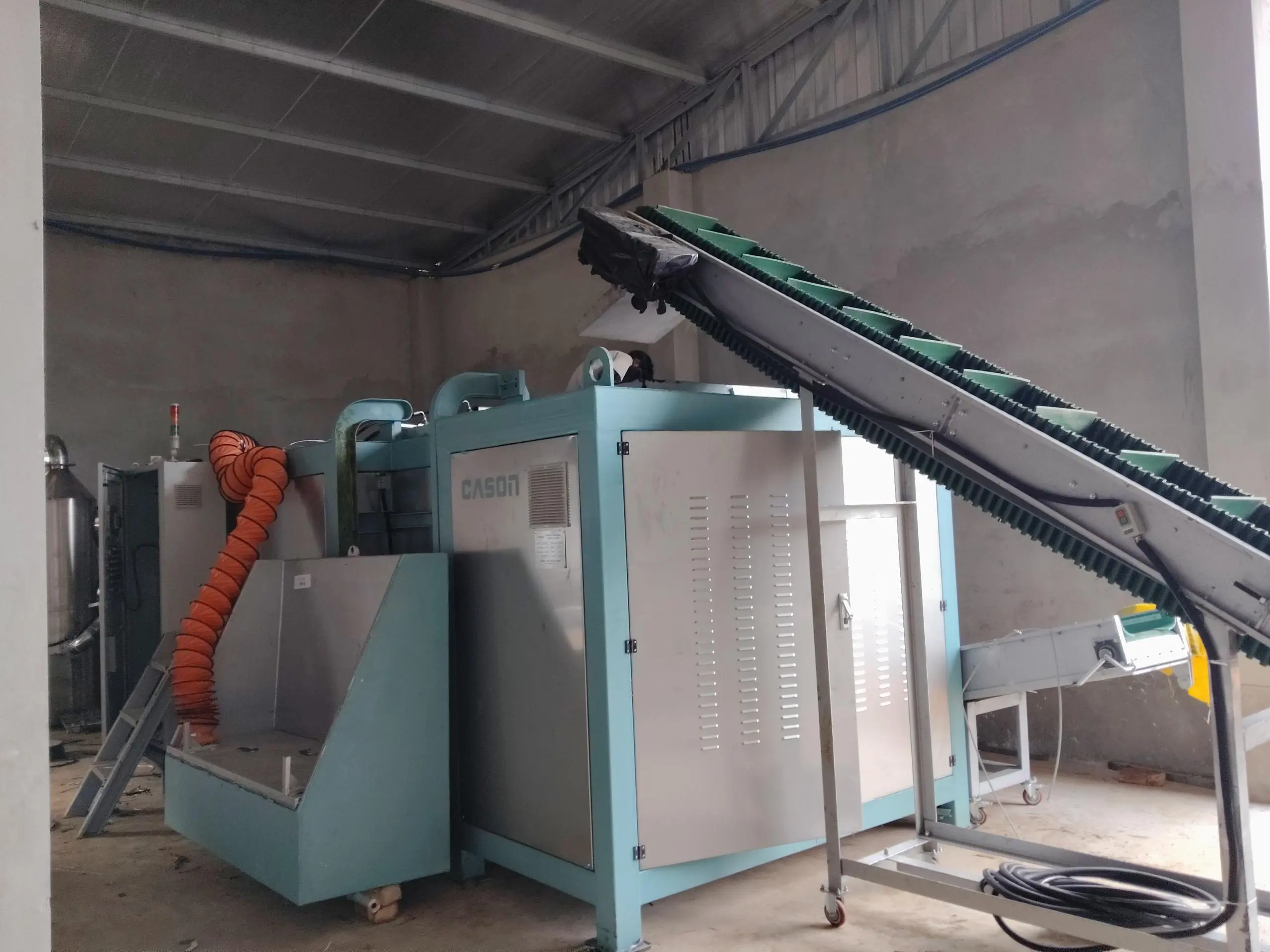
Keep the local veterinarian, collection provider and responsible manager beside that calculation. Ask the collector what the truck can lift, which documents travel with the load and what could cause refusal. Ask the veterinarian when an unusual pattern or suspect signs must stop routine movement. Where approved on-farm treatment is an option, we match our animal carcass treatment equipment range to the peak load, carcass dimensions, utilities and site space.
Walk the route at delivery time
We test the route while the yard is busy. Stand at the proposed holding point when feed arrives. Watch where staff park, where clean tools pass and how animals move between buildings. A neat line on a drawing can be a bad route at 7 a.m.
Now approach from the public road as the collection driver would. A good layout lets the lorry load near the farm edge. It should not tour the live-animal yard first. USDA APHIS guidance describes this separation in practical terms. Pickup stays away from live animals; carcass traffic does not share feed-delivery and everyday work paths.
We mark the following on one simple site plan:
- Barn or pen where mortalities are normally found.
- Route used to move them to temporary holding.
- Feed, live-animal, egg, milk and clean-equipment routes.
- Collection vehicle stop and turning space.
- Gate or line where custody changes hands.
- Wash point for reusable tools and equipment.
- Area that becomes restricted during a suspected-disease event.
The drawing should still make sense in rain and darkness. Is a drain under the loading point? Must the driver back toward a barn? Does the open gate take away the loader’s turning space? Mark each problem. These are easier to fix on paper than during a late pickup.
Give access to named roles, not to everyone with farm keys. Record who carries the key and who makes the daily check.
Put a torch on the container
We begin at floor level, with a torch if the bin sits in shadow. Is it intact? Can staff see a leak? Can a worker see beneath it and clean that surface without shifting a full load? Then trace the seams and try the closure. An awkward carcass can hold a lid open even when the container is sound.
Next, look above and around it. Rain should not run through the holding point and across the yard. A dog, rat, bird or loose animal should find no way in. Watch one loading cycle. The lifting gear should pick up or empty the container without dragging it, catching the lid or tipping material onto bare ground.
Cold storage may be accepted in some local plans. Cold-room doors still need controlled access. The room still needs spill cleanup, washing and a plan for a failed compressor. Nor does a low temperature authorize a disposal route.
Write down the failures the morning crew has probably seen before:
- Lid will not close over the load.
- Seam or drain plug begins to leak.
- Container is nearly full before the booked pickup.
- Vermin or scavenger damage appears.
- Cooling alarm or power supply fails.
- Mud, a locked gate or road work keeps the truck away from the usual point.
Store the spare bin, absorbent and cleanup kit close enough to use, with the right key beside the kit. On the site plan, give spilled liquid, wash water and used absorbent an approved destination. That may be nowhere near the closest drain.
For approved equipment operation, we follow our high-temperature system safety practices. During temporary storage, we keep the job narrower: control the material until its authorized handoff or treatment starts.
Set the clock locally
We do not borrow a holding-time number from another country, species or storage setup. The working limit belongs in the farm plan, together with its source. Beside the limit, write who set it. Perhaps the authority, perhaps the veterinarian and collector together.
A hot yard and a chilled room do not create the same collection problem. So do collection schedules and the receiving site’s acceptance rules. Rather than writing a universal temperature, record what the local plan requires and what staff must check.
Give the delay call an owner. If the truck is late, who phones first? Who can book an alternate approved service? At what internal point does the farm call the veterinarian instead of waiting? Make that point early enough to leave options.
Use a log that fits one clipboard
We keep the record to one clipboard page when its boxes are useful. From that page, the manager should see the discovery, the holding place and the moment the load changed hands.
Use fields such as these:
- Discovery: date, time and exact pen or barn.
- Animal or group ID and species, where the farm uses them.
- Brief observation and any veterinary instruction.
- Name of the person who moved the carcass.
- Holding bay or container number.
- Collector, booking reference and expected arrival.
- Actual pickup time, vehicle or driver reference and destination document.
- Leak, pest, access or delay exception.
- Cleaning time and checker.
Close the job after the truck leaves
For us, the collection gate closing is not the end. Return to the holding point and check the floor, lid, handles, nearby drain and vehicle path. Clean the reusable tools under the farm’s approved procedure. Return mortality tools to their own rack, away from feed tools and the everyday barn kit.
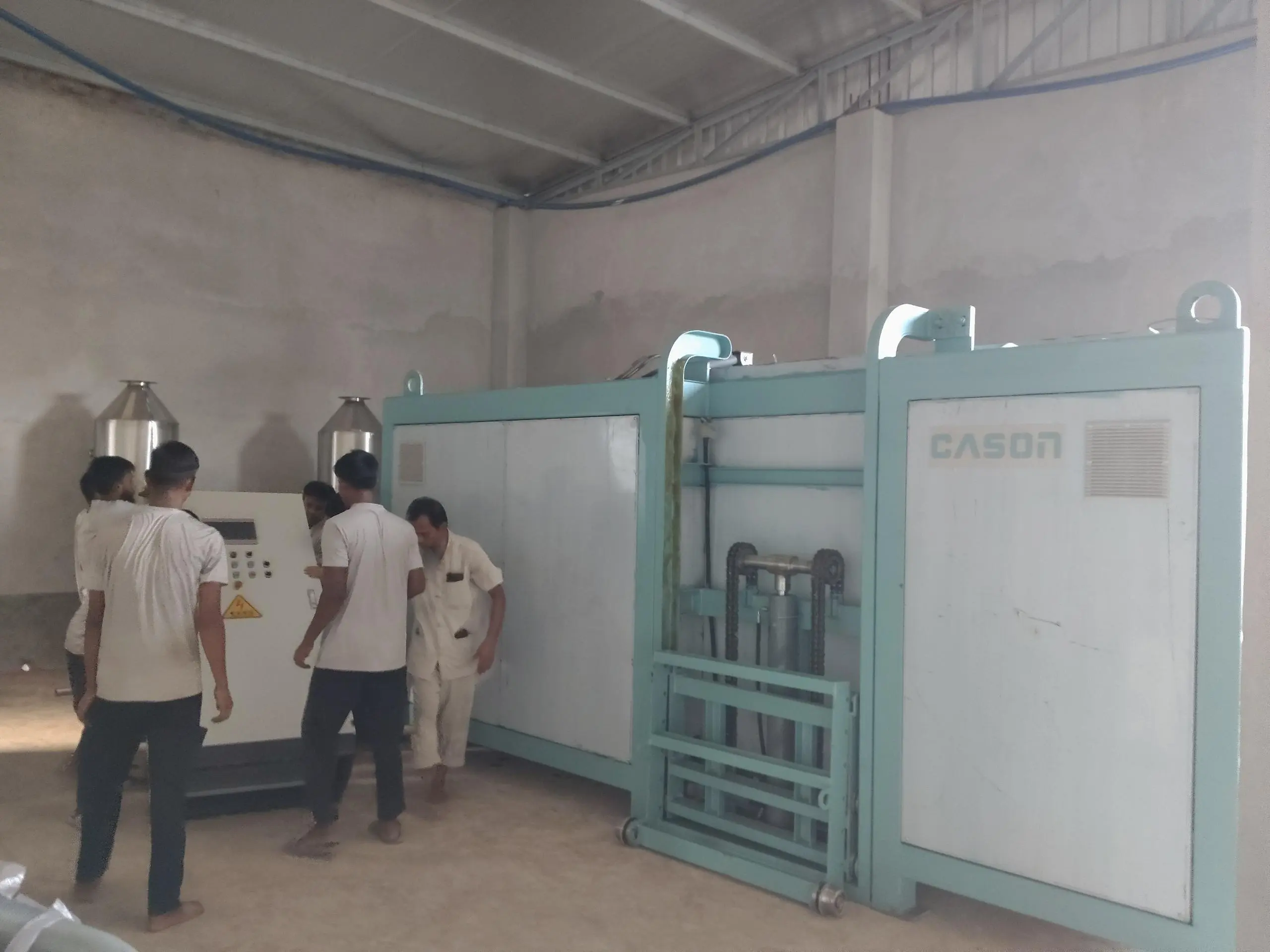
If approved on-farm treatment forms part of the route, we review the whole interface. Our CF-2000 carcass treatment system is complete animal carcass disposal equipment rather than slaughter equipment. Size reduction and controlled treatment take place within one integrated unit, without a separate downstream machine. We use the same integrated engineering approach in our carcass treatment projects.
Some events send the shift straight back to the phone list. Suspected disease is one. So are a refused load, an uncontrolled leak, pest entry, failed cooling, flood, fire or a delay near the site’s written limit. Keep people out, control what can be controlled and call. The yard is the wrong place to invent another disposal route.
Before a storage purchase, we put the holding-load calculation, measured carcass dimensions and marked site plan in front of the veterinarian, collector and local environmental contact. Their answers define the access, containment, record and timing requirements.
Reliable carcass collection may remain the simplest route when visits are frequent and the receiving service is approved. Repeated delays, long transport distances or sharp mortality peaks can change that balance. Approved on-farm carcass treatment can shorten the waiting period, but it also needs the right throughput, utilities, operator time, maintenance plan and local authorization. We compare those points with the real reliability and cost of collection.
Where on-farm treatment is being considered, contact our team with the species, largest carcass, peak holding load, pickup interval, site plan, utilities and local requirements. We will review the animal carcass disposal equipment and site interfaces as one complete system.