
TL;DR: At 70% to 75% inlet moisture, shortlist the C-90E for 6–9 m³/day, C-120E for 8–12 m³/day, C-140E for 10–14 m³/day, or C-160E for 12–16 m³/day. Then check running power, peak-day volume, moisture variation, feeding hours, and site utilities before confirming the model.
An organic fertilizer fermentation tank should be selected from measured daily feed volume, not farm size or an annual manure estimate. The four single-tower models in the Cason product range overlap in rated daily treatment volume. That overlap is useful because it lets a buyer consider operating margin, utilities, and future volume instead of choosing from one number alone.
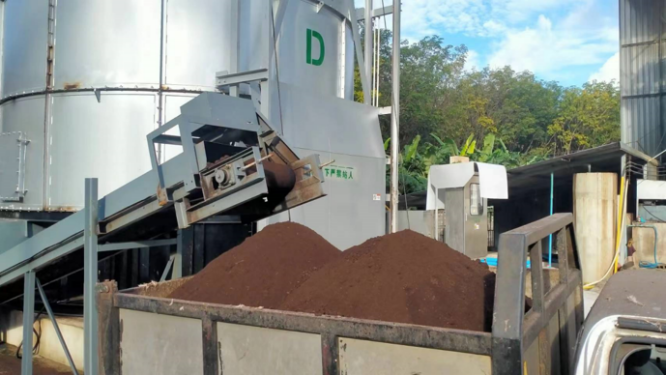
What daily manure volume should you use for model selection?
Use the volume that actually reaches the system on a demanding but realistic day. A monthly average can hide weekend accumulation, seasonal production changes, wash water, bedding, or a feeding schedule that concentrates material into a shorter window.
Start with a simple log. Record the volume delivered each day, the feedstock type, incoming moisture, any bulking material, and the hours available for feeding. Keep ordinary days and peak days visible rather than reducing everything to one average.
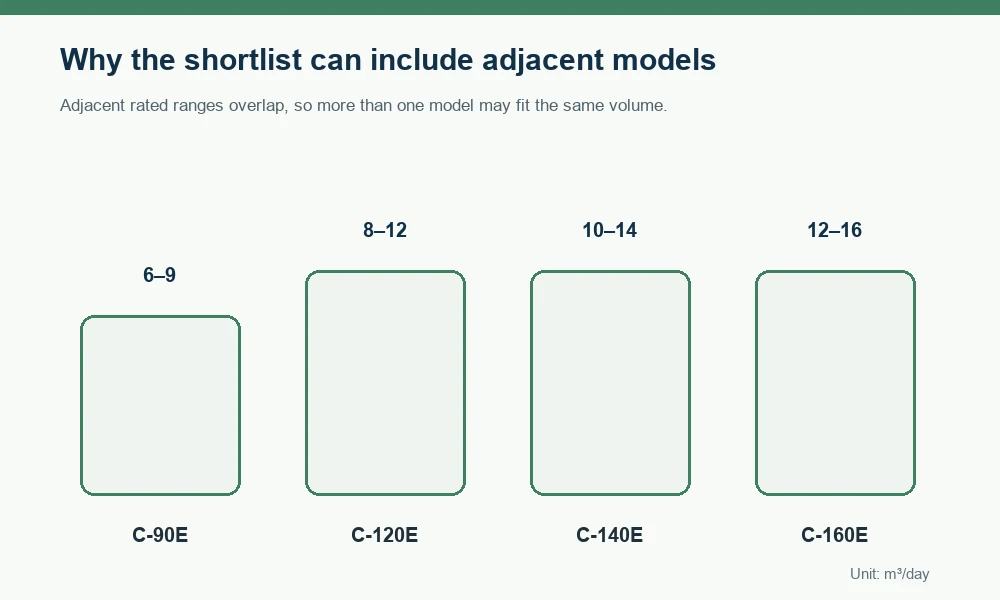
Compare that record with the stated treatment ranges. If measured demand sits near the top of one model and inside the lower half of the next, both models deserve review. The smaller option may fit a stable operation with controlled feeding. The larger option may suit a site with recurring peaks or planned expansion. Neither conclusion should be made before the moisture and power checks.
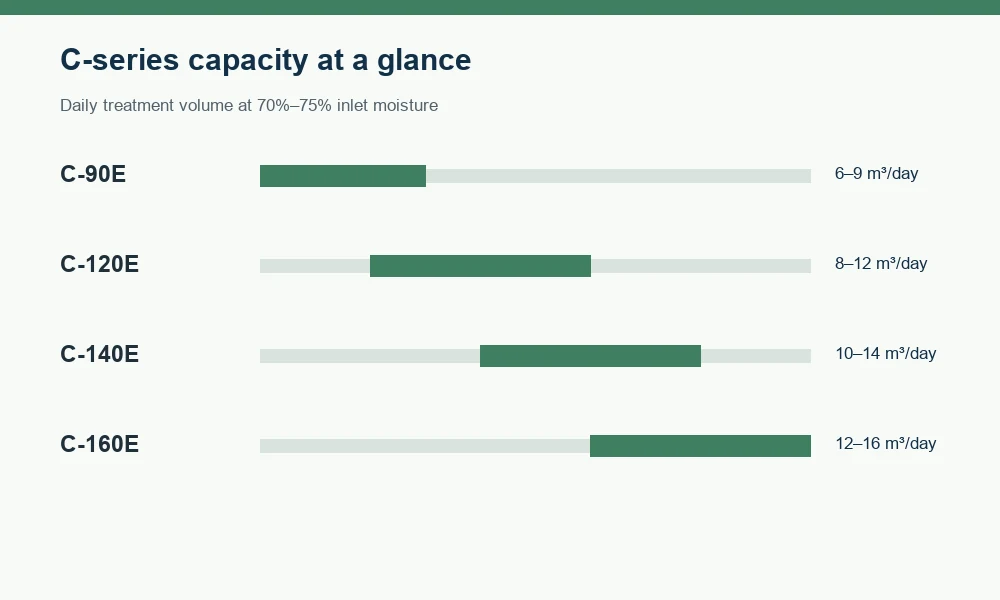
What does the C-series specification table show?
The table below reproduces the four relevant models from Cason’s organic solid-waste solution data. Daily treatment volume applies to inlet material at 70% to 75% moisture. The figures are a shortlisting tool, not a guarantee for every feedstock or operating schedule.
| Selection item | C-90E | C-120E | C-140E | C-160E |
| Equipment volume | 86 m³ | 118 m³ | 135 m³ | 160 m³ |
| Diameter | 5.5 m | 6.0 m | 6.0 m | 6.5 m |
| Installed power | 34.4 kW | 34.4 kW | 41.9 kW | 48.9 kW |
| Operating power | <21 kW | <21 kW | <23 kW | <29 kW |
| Daily treatment volume at 70%–75% inlet moisture | 6–9 m³ | 8–12 m³ | 10–14 m³ | 12–16 m³ |
| Daily output | 2–3 m³ | 2.7–4 m³ | 3.3–4.7 m³ | 4–5.3 m³ |
C-90E covers the lowest range in this comparison. C-120E increases equipment volume from 86 m³ to 118 m³ while retaining the same listed installed and operating power limits as C-90E. This makes the C-120E worth checking when daily demand often moves above 9 m³ but available electrical capacity is already tight.
C-140E extends the treatment range to 10–14 m³/day. Its 6.0 m diameter matches C-120E, while equipment volume rises to 135 m³ and operating power is listed below 23 kW. C-160E reaches 12–16 m³/day, with 160 m³ of equipment volume, a 6.5 m diameter, and operating power below 29 kW.
How should inlet moisture change the shortlist?
The daily treatment row has a condition attached to it. It applies when inlet moisture is 70% to 75%. A site should not copy the rated range into a procurement plan if its feedstock has not been measured on representative days.
Take samples from the actual stream and note what changes the result. Rain exposure, wash water, storage time, bedding, and source separation can all alter the material presented to the tank. The project team should then decide how feedstock outside the stated range will be prepared and whether that preparation changes the daily volume.
This is also where process questions belong. Our aerobic manure fermentation tank selection guide can help frame the wider review, but the four-model comparison should stay tied to Cason’s stated moisture condition. Ask for a feedstock assessment when samples vary or when the material mix is likely to change.
How should you compare operating power and site utilities?
Installed power and operating power support different checks. Use installed power when reviewing the electrical connection and connected-load allowance. Use the stated operating power when comparing the models’ listed running demand. Do not size cables, protection, or transformer capacity from operating power alone.
C-90E and C-120E both list 34.4 kW installed power and operating power below 21 kW. C-140E lists 41.9 kW installed and below 23 kW operating power. C-160E lists 48.9 kW installed and below 29 kW operating power.
Give those figures to the site electrical engineer together with local voltage and frequency, other simultaneous loads, cable distance, and the proposed equipment location. The engineer should confirm the connection, protective devices, controls, and any project-specific requirements.
Physical access matters too. The listed diameters rise from 5.5 m for C-90E to 6.5 m for C-160E, but tank diameter is not a complete layout. Reserve space for feeding, discharge, operator access, maintenance, ventilation and deodorization connections, drainage interfaces, and installation work.
How much practical capacity headroom is useful?
There is no universal spare-capacity percentage in the verified model data. Build the margin from the site record instead. Mark the highest repeatable daily volume, the largest short-term accumulation, planned herd or production changes, and days when fewer operating hours are available.
A farm recording 8 m³/day on normal days and occasional 10 m³/day peaks should compare C-90E and C-120E rather than treating 8 m³ as a final answer. A site that repeatedly reaches 12 m³/day should compare C-120E, C-140E, and C-160E against the frequency and cause of those peaks. These are examples of how to use the ranges, not model recommendations for an unassessed site.
Avoid buying volume that the operation cannot use. A larger tank also changes installed power, running demand, equipment diameter, feeding arrangements, and civil work. The Vietnam farm project gives buyers a first-party project page to review while discussing how equipment sits within a working farm system.
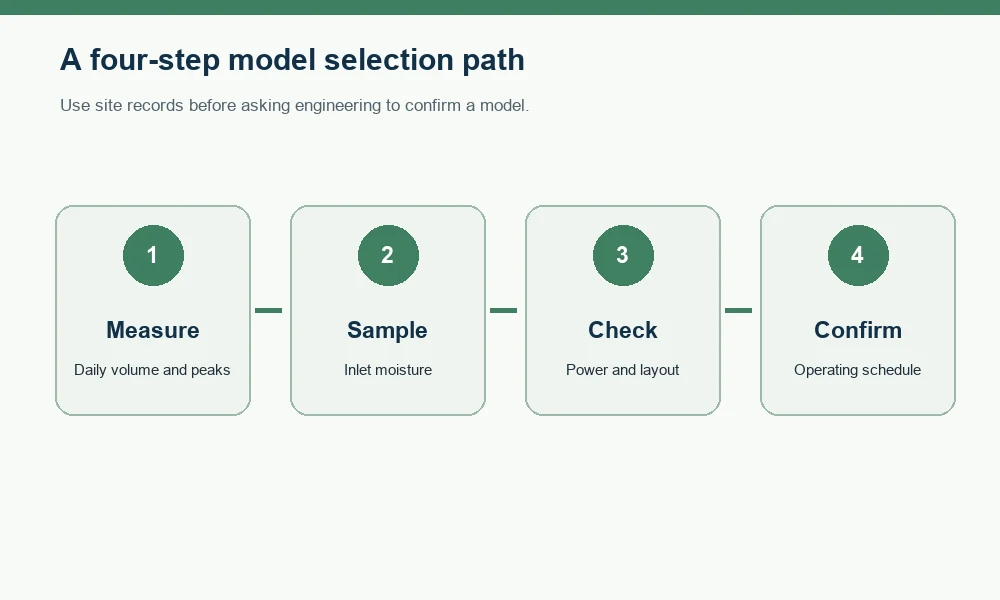
Img.Caption: A reliable shortlist moves from measured feed volume and moisture to utility, layout, and operating-schedule checks before model confirmation.webp
Which C-series model belongs on the shortlist?
C-90E belongs on the first shortlist when verified daily input remains within 6–9 m³ at the stated moisture condition and the site favors the smallest diameter in this group. C-120E is the next check for 8–12 m³/day, especially where its larger equipment volume can be considered without a higher listed power value than C-90E.
C-140E fits the 10–14 m³/day comparison band and keeps the same listed diameter as C-120E, with higher equipment volume and power. C-160E covers 12–16 m³/day and is the largest of these four by equipment volume, diameter, installed power, and listed operating-power limit.
When demand falls inside an overlap, compare both adjacent models. Use peak frequency, moisture variation, daily feeding window, utility capacity, layout, and planned volume changes to decide which one moves to engineering review.
What should you send Cason for a final model check?
Prepare one operating sheet with feedstock type, at least several weeks of daily volume records, representative moisture results, peak accumulation, planned feeding hours, site voltage and frequency, available connected load, installation space, and expected changes in volume. Add photos or a simple material-flow sketch when access is constrained.
Send that package through our project consultation page. We can check the measured range against C-90E, C-120E, C-140E, and C-160E, identify missing site inputs, and prepare the model-specific engineering discussion without replacing unknowns with estimates.
FAQ
Can I select a tank from average daily manure volume?
Use the average as one reference, then check peak days and short-term accumulation. Model overlap makes it practical to compare an average-fit option with the next size when peaks recur.
Do the treatment ranges apply to any inlet moisture?
No. The listed daily treatment ranges in this comparison apply at 70% to 75% inlet moisture. Material outside that condition needs assessment before the range is used for planning.
Why do C-90E and C-120E show the same power figures?
Cason’s model table lists both at 34.4 kW installed power and operating power below 21 kW. Site electrical design still requires project-specific confirmation.
When should a buyer consider a twin-tower model?
This article only compares the four single-tower C-series models. If verified demand, operating continuity, or project configuration falls outside that boundary, ask Cason to review the wider product range rather than extrapolating a twin-tower result from this table.