
In modern organic waste management, the efficiency of fermentation equipment directly affects composting speed, product quality, and operational stability. At Cason, we focus on improving process efficiency through advanced engineering and thoughtful design. The high-temperature aerobic fermentation tank is an essential solution for transforming organic waste into valuable fertilizer in a controlled environment. Among the many technical factors involved, airflow dynamics play a critical role in determining the performance of an aerobic fermentation tank.
Understanding Airflow in Aerobic Fermentation Tanks
Airflow provides the oxygen required for aerobic microorganisms to break down organic matter. In a high-temperature aerobic fermentation tank, the aeration system continuously introduces oxygen while removing excess heat and moisture generated during microbial activity. Proper aeration supports microbial metabolism and promotes efficient decomposition of organic materials such as manure, agricultural residues, and food waste.
During fermentation, microorganisms consume oxygen while converting organic compounds into carbon dioxide, water, and stabilized organic matter. If oxygen levels fall too low, the process can shift toward anaerobic conditions, which slows decomposition and produces undesirable odors. Maintaining adequate airflow is therefore essential to sustain aerobic activity and stable composting conditions.
How Airflow Dynamics Influence Fermentation Efficiency
Airflow dynamics determine how evenly oxygen spreads throughout the composting material. When air distribution is uniform, microorganisms can operate efficiently across the entire fermentation mass. This supports rapid heating, allowing temperatures to reach the thermophilic range of about 55 to 70°C, which is ideal for organic matter decomposition and pathogen reduction.
Research shows that aeration rate directly influences oxygen concentration and temperature development in composting systems. Higher aeration rates can help the material enter the high-temperature phase more quickly, accelerating the decomposition process. However, excessive airflow may cool the system and reduce microbial efficiency. Balanced airflow is therefore essential to maintain both oxygen availability and optimal fermentation temperature.
Effective airflow design also prevents the formation of anaerobic zones within the fermentation tank. Dead zones with limited oxygen supply can slow decomposition and affect overall compost quality. Advanced tank structures use strategically positioned aeration pipes, fans, and mixing mechanisms to ensure consistent oxygen delivery and uniform microbial activity.
Optimizing Airflow with Reliable Equipment
At Cason, we integrate airflow management into the design of every high-temperature aerobic fermentation tank. Systems such as mixing mechanisms and programmed aeration allow oxygen to circulate evenly through the material, supporting stable fermentation conditions. Mechanical agitation also helps distribute heat, moisture, and microorganisms throughout the tank, preventing localized compaction and improving overall efficiency.
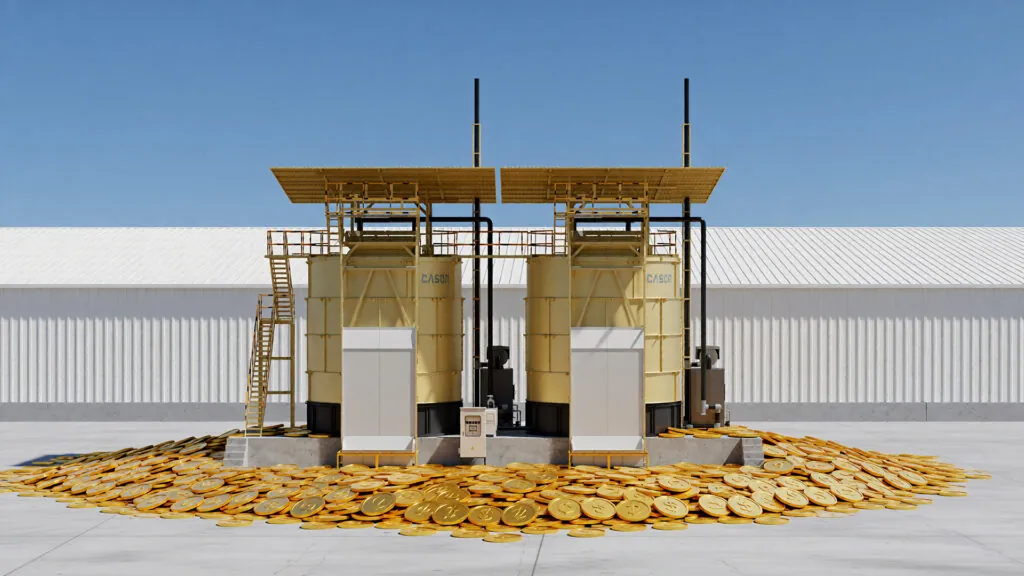
For operations seeking reliable performance, the DT-280E aerobic fermentation tank from Cason provides a practical solution. The DT-280E is designed for continuous organic waste processing with integrated aeration, mixing, and temperature control systems. Its enclosed structure supports consistent airflow management while reducing odor emissions and maintaining a stable fermentation environment.
Moving Toward More Efficient Organic Waste Treatment
Airflow dynamics are a fundamental factor in the operation of any aerobic fermentation system. Balanced aeration improves microbial activity, supports stable thermophilic conditions, and ensures uniform decomposition throughout the fermentation tank.
At Cason, we continue to refine our equipment design to support efficient airflow management and stable fermentation performance. Solutions such as the DT-280E help businesses convert organic waste into nutrient-rich fertilizer while maintaining reliable process control. With carefully engineered aeration systems and durable construction, aerobic fermentation tanks can provide consistent results for agricultural and waste management operations seeking efficient organic waste treatment.