
Food waste management has become increasingly critical for sustainable agriculture. At Cason, we continuously explore innovative solutions to improve efficiency, environmental compliance, and safety. Our food waste fermentation tank systems provide a controlled, odor-reduced, and fully traceable method for composting organic waste. By integrating intelligent technologies, we offer a reliable solution that adapts to modern farm operations, regulatory standards, and the growing demand for sustainable practices. These systems are designed to optimize microbial activity, improve decomposition rates, and minimize risks associated with traditional composting methods.
Advantages of Intelligent In-Vessel Composting Compared to Traditional Methods
Traditional food waste composting methods, such as open-air or pile-based systems, often face challenges including inconsistent temperature and moisture levels, slow decomposition, odor emissions, and exposure to environmental contaminants. These limitations make it difficult for farms and large-scale food operations to achieve predictable and high-quality compost output. In contrast, intelligent in-vessel systems, like Cason’s kitchen waste fermentation tank, allow precise control of temperature, moisture, and aeration throughout the composting process. This controlled environment ensures optimal microbial activity, faster and more complete decomposition, and reduced risk of contamination and odor. Unlike traditional methods that are vulnerable to runoff and weather conditions, our system provides a fully enclosed process that is safe, hygienic, and efficient. The intelligent design also enables continuous monitoring and recording of key parameters, supporting compliance, process optimization, and consistent quality output for large-scale agricultural or institutional operations. By addressing the shortcomings of conventional composting, intelligent in-vessel solutions offer farms and facilities a more reliable, predictable, and environmentally responsible way to process organic waste.
Seamless Integration with Advanced Systems
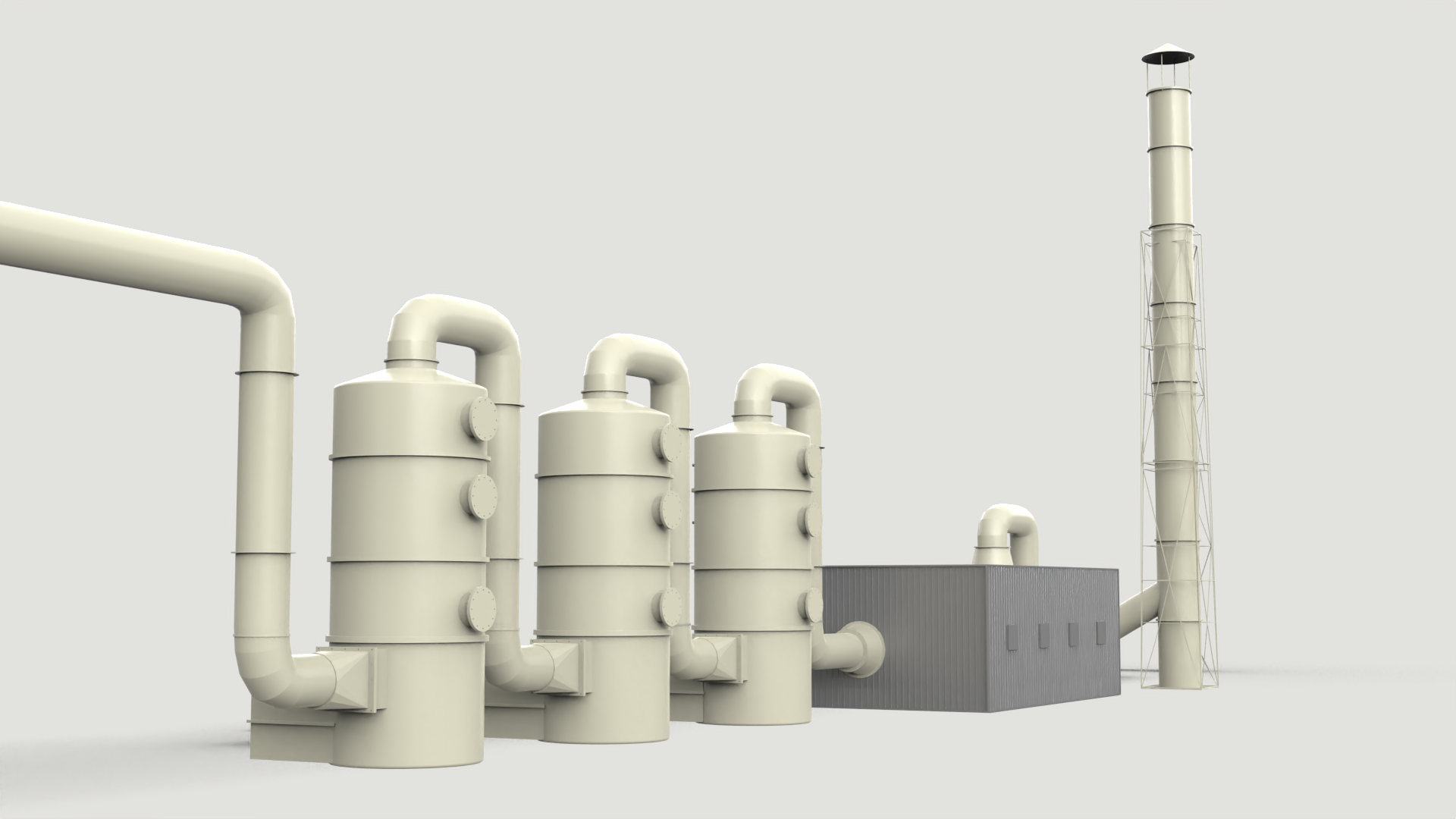
To further enhance performance, the C-140E food waste fermentation tanks are equipped with integrated auxiliary systems, including conveying modules, energy-saving components, and air treatment features, which together collect odors from multiple tanks and process them before releasing cleaned air at a safe height. These supporting systems work in coordination with the C-140E fermentation tanks to optimize operation, ensure stable performance, maintain hygienic conditions, and provide effective odor control, without being standalone products themselves. These supporting systems are designed to optimize the operation of the C-140E fermentation tank, ensuring stable performance, hygienic conditions, and effective odor control without being standalone products themselves. This integration ensures environmentally friendly operations and protects farm personnel from unpleasant emissions. Combining in-vessel fermentation with centralized odor control creates a closed-loop solution that efficiently handles organic waste while maintaining clean production conditions. The system’s scalability allows it to adapt to different farm sizes and layouts, demonstrating the flexibility and innovation we prioritize in product development.
Operational Efficiency and Service Excellence
At Cason, we prioritize comprehensive support through pre-sales consultation, on-site installation, and post-sales maintenance. Our engineering team ensures every kitchen waste fermentation tank operates smoothly and efficiently. By reducing manual intervention and maintaining high operational standards, we help farms achieve productivity while adhering to environmental regulations. Our production facilities are equipped with advanced machinery, enabling timely delivery without compromising quality. Regular follow-ups and technical support strengthen customer relationships and ensure the long-term success of our solutions.
Conclusion: Sustainable Solutions for Modern Farming
Transitioning from traditional composting to intelligent in-vessel systems provides significant advantages in efficiency, safety, and environmental protection. Utilizing Cason’s food waste fermentation tank and kitchen waste fermentation tank technologies, the C-140E fermentation tank serves as the core processing unit, supported by integrated conveying, energy-saving, and deodorization systems, to deliver a complete, scalable, and eco-friendly solution for modern farms. By combining scientific principles, advanced equipment, and attentive service, we ensure sustainable, odor-controlled, and resource-efficient composting processes. Intelligent in-vessel composting is a practical step toward responsible farm management and long-term operational success, supporting both productivity and environmental stewardship.