
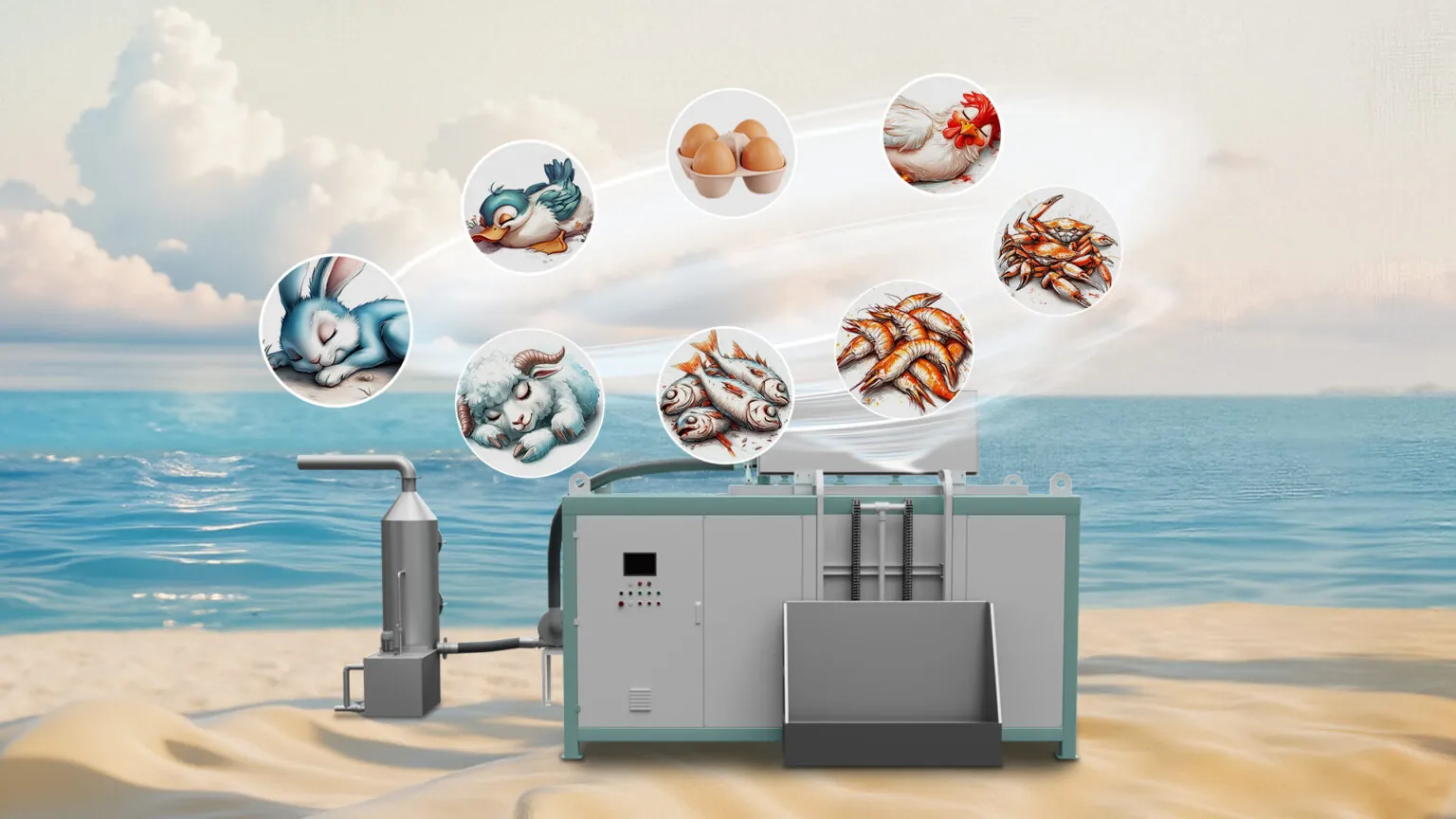
Modern agriculture generates large volumes of organic waste, including livestock manure, food residues, and animal carcasses. Without proper treatment, these materials can create environmental risks and biosecurity concerns on farms. Today, an animal carcass composting machine provides an effective way to convert these wastes into useful agricultural resources. By integrating controlled fermentation and intelligent monitoring, systems developed by Cason help farms transform waste streams into nutrient-rich bio-fertilizer.
The Challenge of Farm Organic Waste
Livestock farms and agricultural facilities must handle a variety of organic by-products. Animal carcasses, manure, and feed residues are all biodegradable but can produce harmful pathogens and odors if left untreated. Traditional disposal methods such as burial or open composting often require large areas and extended processing time.
Modern composting equipment addresses these challenges through enclosed treatment systems. A waste composter machine accelerates decomposition in a controlled environment where temperature, oxygen, and moisture are carefully regulated. These conditions allow microorganisms to break down organic material efficiently while preventing environmental contamination.
How an Animal Carcass Composting Machine Works
An animal carcass composting machine uses aerobic fermentation to convert organic waste into stable compost. The process begins when organic material is loaded into the composting chamber. Inside the system, mixing components continuously stir the material while airflow introduces oxygen needed for microbial activity.
Temperature and humidity are monitored through intelligent control systems that automatically adjust the environment for optimal decomposition. As microorganisms metabolize the organic matter, heat is generated and maintained within a controlled range, which accelerates breakdown and helps eliminate harmful pathogens.
During the fermentation cycle, odor control units and ventilation systems manage exhaust gases, ensuring that the composting process remains hygienic and environmentally responsible. Once the process is complete, the machine discharges stabilized compost that can be used as organic fertilizer.
From Farm Waste to Valuable Bio Fertilizer
The output of a well-designed waste composter machine is a nutrient-rich material suitable for agricultural use. Through high-temperature fermentation and microbial decomposition, organic waste is transformed into fertilizer containing significant organic matter and plant nutrients.
This bio-fertilizer improves soil structure and enhances the soil’s ability to retain water and nutrients. Farmers can apply it to crops, orchards, or vegetable fields to support sustainable production while reducing dependence on chemical fertilizers.
At the same time, composting significantly reduces the volume of organic waste. Farms can manage carcasses, manure, and food residues in a single system, creating a circular agricultural process where waste becomes a productive input.
Intelligent Composting for Modern Farms
Technological improvements have made composting equipment easier to operate and more efficient. Many modern systems integrate automated feeding, mixing, heating, and discharge processes. Intelligent monitoring platforms can track temperature, humidity, and oxygen levels in real time, ensuring stable operation throughout the fermentation cycle.
For large livestock farms, this level of automation helps simplify waste management while maintaining strict biosecurity standards. The enclosed design also reduces odor emissions and minimizes environmental impact around the farm site.
Cason incorporates these capabilities into its composting systems to support reliable organic waste treatment across various agricultural applications.
Turning Waste into a Resource
Organic waste management is becoming an essential part of sustainable agriculture. With the help of an animal carcass composting machine and a reliable waste composter machine, farms can transform waste materials into safe and beneficial bio-fertilizer.
By combining controlled fermentation, intelligent monitoring, and efficient material handling, Cason equipment supports farms in building a circular approach to waste management where organic residues are no longer a burden but a valuable agricultural resource.