
Organic waste treatment facilities must meet increasingly strict environmental regulations related to odor, greenhouse gases, and air quality. Traditional composting methods, such as open windrow piles, often release noticeable odors and uncontrolled emissions during decomposition. These emissions may include ammonia, volatile organic compounds, and other odor-causing gases that can affect surrounding communities.
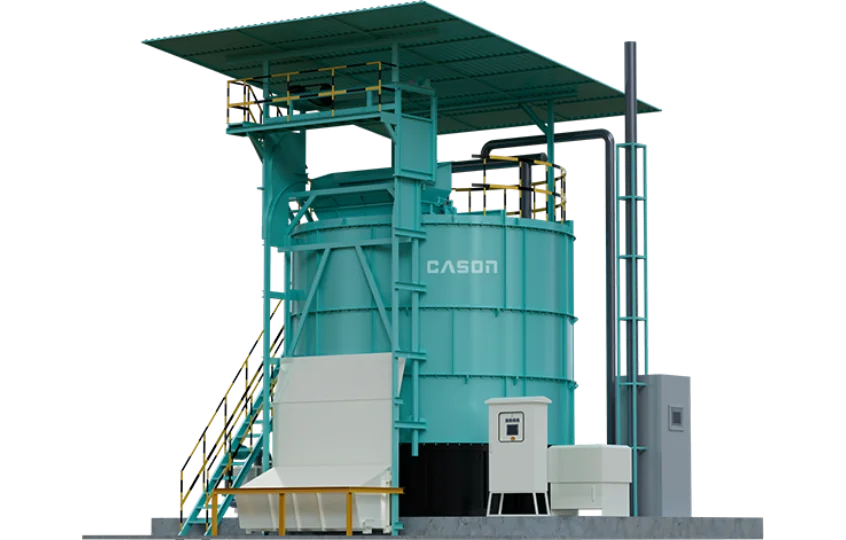
For municipalities, agricultural operations, and food processing facilities, maintaining compliance with emission standards requires a controlled and reliable waste treatment method. This is where in-vessel composting provides a practical solution. At Cason, we focus on systems that create a contained and controlled composting environment, helping operators manage organic waste while reducing environmental impact.
The Controlled Environment of In-Vessel Composting
The key advantage of in-vessel composting technology lies in its enclosed system design. Organic waste is processed inside a sealed container, tunnel, or rotating vessel where temperature, airflow, and moisture levels can be carefully managed.
This controlled environment promotes efficient microbial activity while preventing the conditions that cause excessive emissions. Proper aeration keeps the process aerobic, which helps prevent anaerobic decomposition that typically produces strong odors and harmful gases. Research shows that maintaining aerobic conditions significantly reduces odor formation and improves overall composting efficiency.
Enclosure also protects the process from external weather conditions and allows facilities to operate consistently throughout the year. Because the composting environment is controlled, operators can maintain optimal temperature ranges that support rapid organic matter breakdown and pathogen reduction.
Managing Odor and Air Emissions
One of the most important environmental benefits of in-vessel composting is the ability to capture and treat process air before it is released. In many systems, exhaust air passes through filtration or biofilter systems that remove odor compounds and other emissions.
By collecting and treating process air, facilities can significantly reduce nuisance odors and meet strict environmental standards. Many enclosed composting systems are designed specifically for locations where odor sensitivity is high, including urban areas and facilities located near residential zones.
Controlled airflow and aeration also reduce the buildup of gases such as ammonia and sulfur compounds. Studies have shown that optimized composting conditions can dramatically lower odor emissions during the active composting phase.
Supporting Sustainable Waste Treatment
Another reason organizations adopt in-vessel composting technology is its role in reducing overall environmental impact. By diverting organic waste from landfills, composting helps lower methane generation associated with anaerobic landfill decomposition.
The process also converts organic waste into stable compost that can be used as a soil amendment, supporting agriculture and soil health. At the same time, the enclosed composting system requires less land area compared with traditional open-air methods and allows for better monitoring of process parameters.
For waste management operators, these features support both regulatory compliance and operational efficiency.
Cason In-Vessel Composting Solutions for Emission Compliance
At Cason, we design equipment that supports reliable and controlled composting operations. Our solutions are built to maintain stable aeration, temperature control, and enclosed processing conditions that align with environmental regulations.
Systems such as the DT-320E are developed to help facilities process organic waste efficiently while reducing odor and air emissions. By applying in-vessel composting and advanced process control, we help operators manage waste responsibly and maintain compliance with modern emission standards.
Through the continued development of in-vessel composting technology, Cason supports waste management strategies that balance operational needs with environmental responsibility.