
Understanding cellular metabolism requires a clear distinction between how different biological pathways extract energy from organic matter. In our extensive engineering work with industrial bioprocesses, we find that confusing the textbook definitions of fermentation and aerobic respiration can lead to misaligned operational expectations. In cellular biology, these terms describe completely different pathways for electron transfer and adenosine triphosphate (ATP) generation. For commercial processing facilities, understanding these underlying biological mechanisms is essential for properly managing oxygen inputs, internal thermal dynamics, and overall structural throughput.
The Cellular Mechanisms of Fermentation and Aerobic Respiration
The fundamental difference between fermentation and aerobic respiration lies in whether oxygen acts as the final electron acceptor in the metabolic pathway. Fermentation is a strictly anaerobic pathway that functions as an extension of glycolysis. When oxygen is entirely absent, cells must regenerate oxidized nicotinamide adenine dinucleotide (NAD+) to keep glycolysis moving forward. This pathway does not utilize an electron transport chain, resulting in a limited net energy yield of only 2 ATP molecules per molecule of glucose, alongside byproducts like lactic acid or ethanol.
In contrast, aerobic respiration is a highly efficient, oxygen-dependent pathway. It progresses completely through glycolysis, the citric acid cycle (Krebs cycle), and oxidative phosphorylation. Here, molecular oxygen (O₂) serves as the final electron acceptor at the end of the electron transport chain, driving the synthesis of up to 36 to 38 ATP molecules per glucose molecule.
Deciphering “Aerobic Fermentation” in Industrial Waste Systems
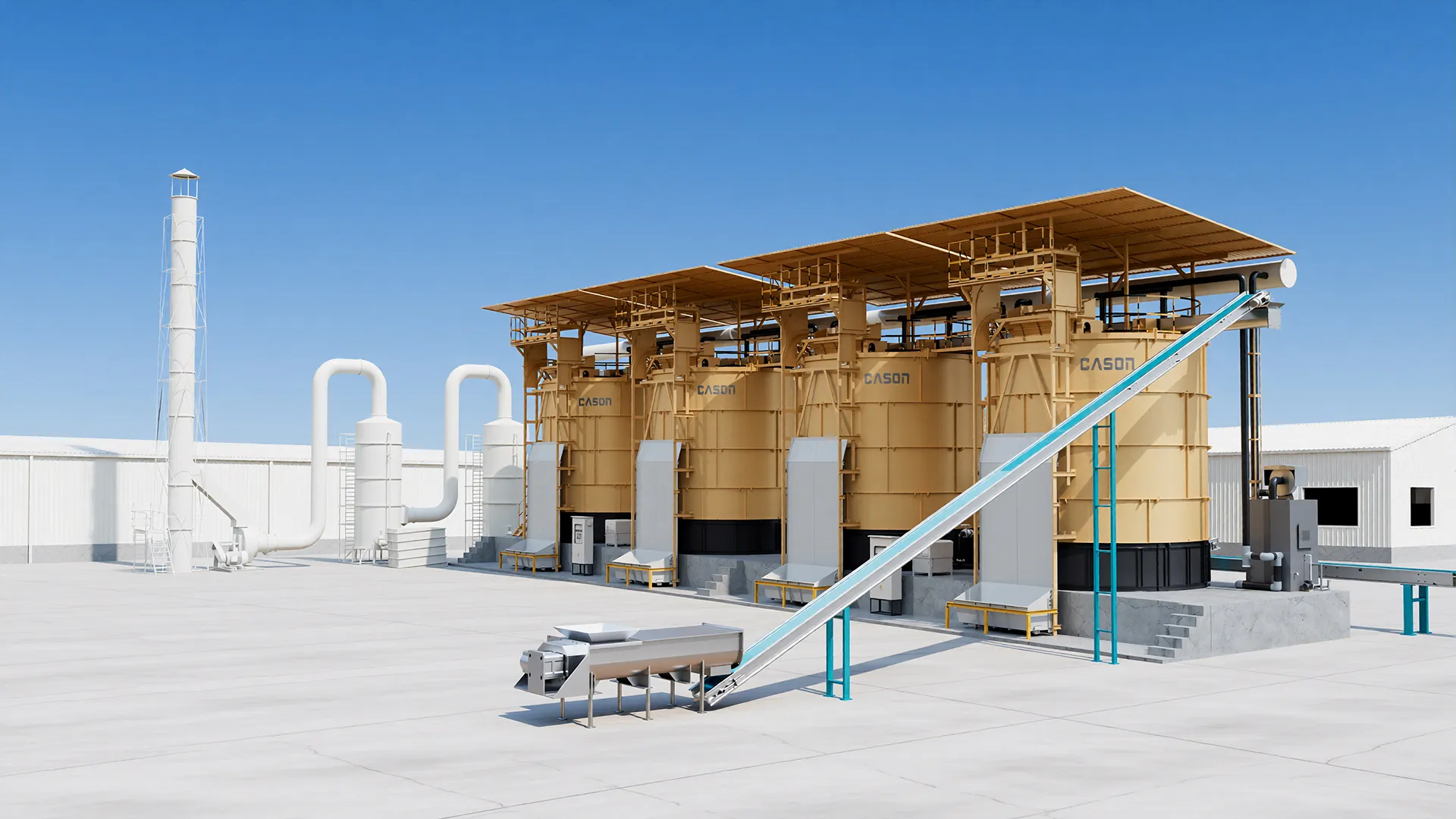
While textbook biology treats fermentation as an anaerobic process, the industrial waste industry uses the phrase “aerobic fermentation” as practical engineering shorthand for accelerated, thermophilic composting. Through our engineering developments at CASON, we bridge this vocabulary gap by designing enclosed systems that combine the high microbial activity of rapid decomposition with continuous forced-air oxygenation. In a heavy-duty high temperature aerobic fermentation tank, the process is entirely oxygen-dependent. The rapid, continuous breakdown of dense organic matter by thermophilic bacteria generates intense natural biological heat, driving internal temperatures up into a self-sustaining range of 55°C to 65°C to eliminate pathogens and stabilize waste without foul odors.
Technical Coordination and Site Integration Requirements
Successfully deploying a commercial-scale high temperature fermentation tank into an active industrial facility demands precise mechanical and civil planning during the procurement phase. Engineering procurement teams must carefully map out critical spatial and utility interfaces, including three-phase electrical connections, structural concrete slab load capacities, automated upstream conveyor feeding routes, and downstream cured material handling space. Through our dedicated ODM and OEM manufacturing workflows, we focus on tailoring these exact structural touchpoints to match a facility’s specific daily waste volume and localized climate conditions. Addressing these physical boundaries early eliminates installation bottlenecks and ensures the machinery operates smoothly as a core facility asset.
B2B Procurement Standards and Long-Term Operational Support
Investing in industrial-grade agricultural waste infrastructure requires a disciplined evaluation of technical specifications and post-commissioning service structures. For B2B project managers, securing reliable operational uptime depends heavily on the availability of transparent preventative maintenance schedules, detailed operator safety training programs, and responsive wear-parts supply networks. When we engage in custom engineering or OEM manufacturing discussions, we prioritize establishing clear, written baselines regarding a partner’s primary material characteristics, seasonal climate fluctuations, and local electrical compliance codes. This data-driven, documentation-first approach protects your capital investment and ensures the system delivers dependable, fully compliant bio-waste processing for years to come.