
Navigating industrial waste management requires a precise understanding of specialized equipment categories to prevent costly engineering mismatches. When commercial buyers search for an aerobic septic tank, they often inadvertently cross the line between two entirely different biological processing technologies: residential/institutional wastewater treatment and solid organic waste composting. While both processes harness oxygen-dependent microbes, their mechanical structures, material handling capabilities, and operational goals are completely distinct. Misinterpreting these terms during the initial planning stages can lead to incorrect infrastructure specifications and compromised facility workflows.
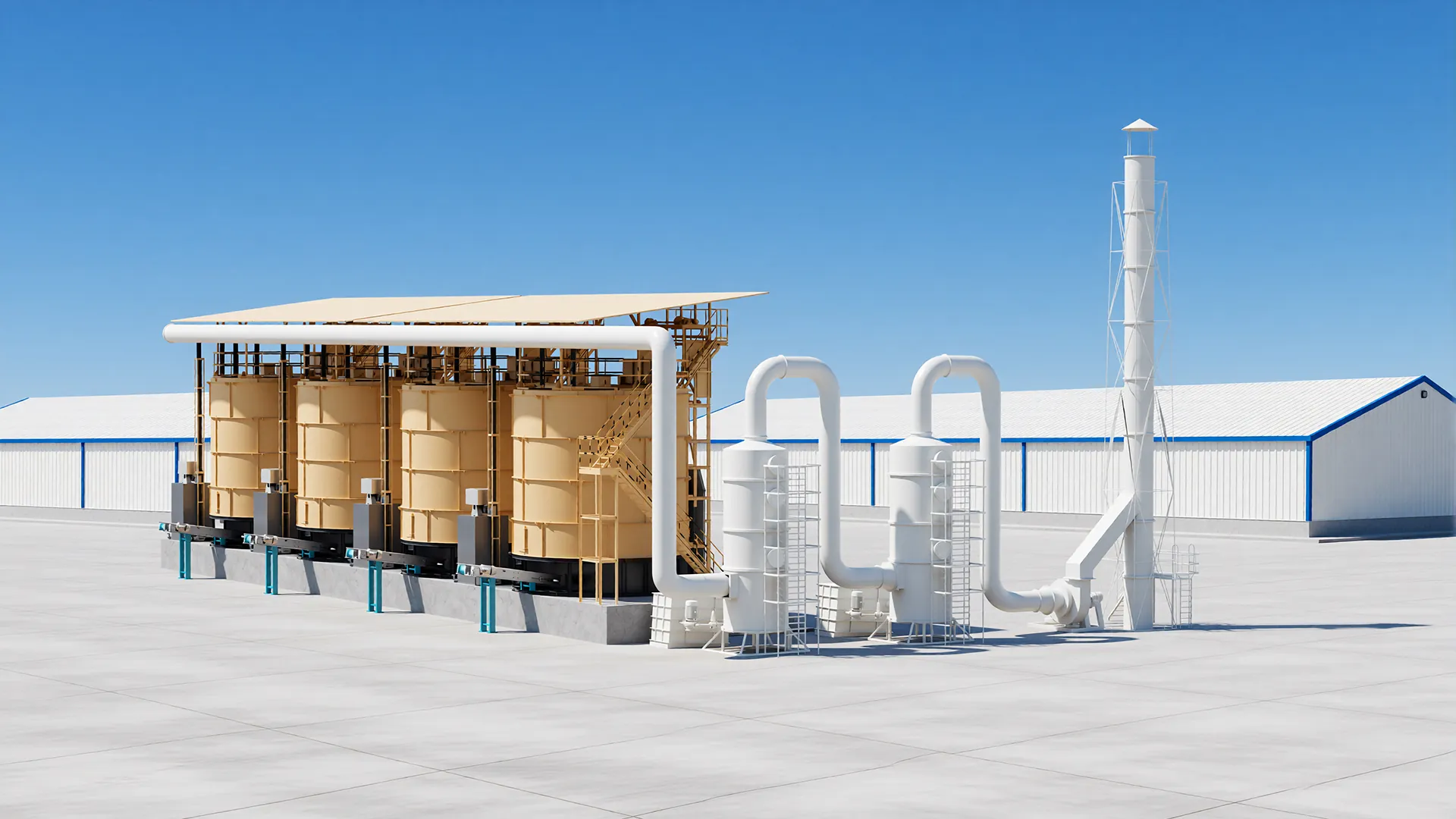
Wastewater Treatment versus Solid Waste Composting
A conventional aerobic septic system, or aerobic treatment unit (ATU), is essentially a small-scale, localized wastewater treatment plant designed to handle liquid sewage from buildings. It injects oxygen into a liquid chamber to accelerate the breakdown of dissolved organic matter before discharging clarified effluent into a drainfield.
Conversely, solid waste processing requires a totally different thermodynamic and physical approach. Through our advanced engineering developments at CASON, we manufacture highly insulated containment systems engineered specifically for dense, solid organic matter like livestock manure, sludge, and food waste. Instead of managing liquid flow, a heavy-duty high temperature aerobic fermentation tank optimizes the life cycle of thermophilic bacteria within a solid matrix, utilizing continuous mechanical agitation and high-pressure forced aeration to transform raw bulk waste into stable, nutrient-rich organic base material.
Regulating Variables in Enclosed Processing Environments
The biological mechanism driving an industrial energy saving compost tank relies on strict process control rather than passive settlement. While an aerobic wastewater unit focuses purely on reducing biochemical oxygen demand in liquids, a solid-phase fermentation vessel must continuously regulate three critical variables: internal moisture balance, uniform oxygen distribution, and natural biological heat retention. Because the thermophilic microbes rapidly metabolize carbon and nitrogen within the enclosed chamber, they naturally generate intense biological heat, driving internal temperatures up into a self-sustaining range of 55°C to 65°C. This intensive thermal environment completely neutralizes pathogens and weed seeds within a fraction of the footprint required by traditional open-air windrow methods.
Infrastructure Alignment and Civil Engineering Standards
Integrating a commercial-scale fermentation vessel into an active agricultural or industrial facility demands comprehensive mechanical and civil planning long before the equipment ships. Engineering procurement teams must carefully map out structural concrete slab load capacities, dedicated three-phase electrical connections, localized leachate drainage routing, and unhindered clearance for heavy loading machinery like telehandlers or conveyors. Through our specialized OEM and ODM manufacturing services, we focus on customizing these physical connection points to seamlessly match a facility’s unique layout and daily processing volumes. Resolving these spatial boundaries early prevents logistical friction and guarantees that the system operates smoothly as a core facility asset.
Post-Commissioning Support and B2B Procurement Discipline
Securing the long-term profitability of an organic waste infrastructure project depends on a disciplined approach to post-installation support and technical clarity. For B2B project managers, ensuring continuous operational uptime requires access to comprehensive preventative maintenance manuals, detailed operator safety training programs, and transparent wear-parts supply networks. When we engage in custom engineering or ODM contract discussions, we prioritize establishing clear, written baselines regarding a partner’s primary waste profiles, regional electrical compliance codes, and local climate challenges. This documentation-first strategy guarantees that the final manufactured machinery delivers dependable, fully compliant bio-waste processing performance over its entire operational lifespan.