
As we support different livestock operations, many clients ask how to choose between the Cason C-Series and DT-Series when planning manure treatment upgrades. At the beginning of this evaluation, recognizing the functions of animal waste fermentation equipment and how an organic manure vertical fermentation tank fits into a farm’s daily schedule helps clarify the decision. Each farm has unique output volumes, staffing patterns, and available construction space, so selecting an appropriate structure influences both performance and long-term operating comfort.
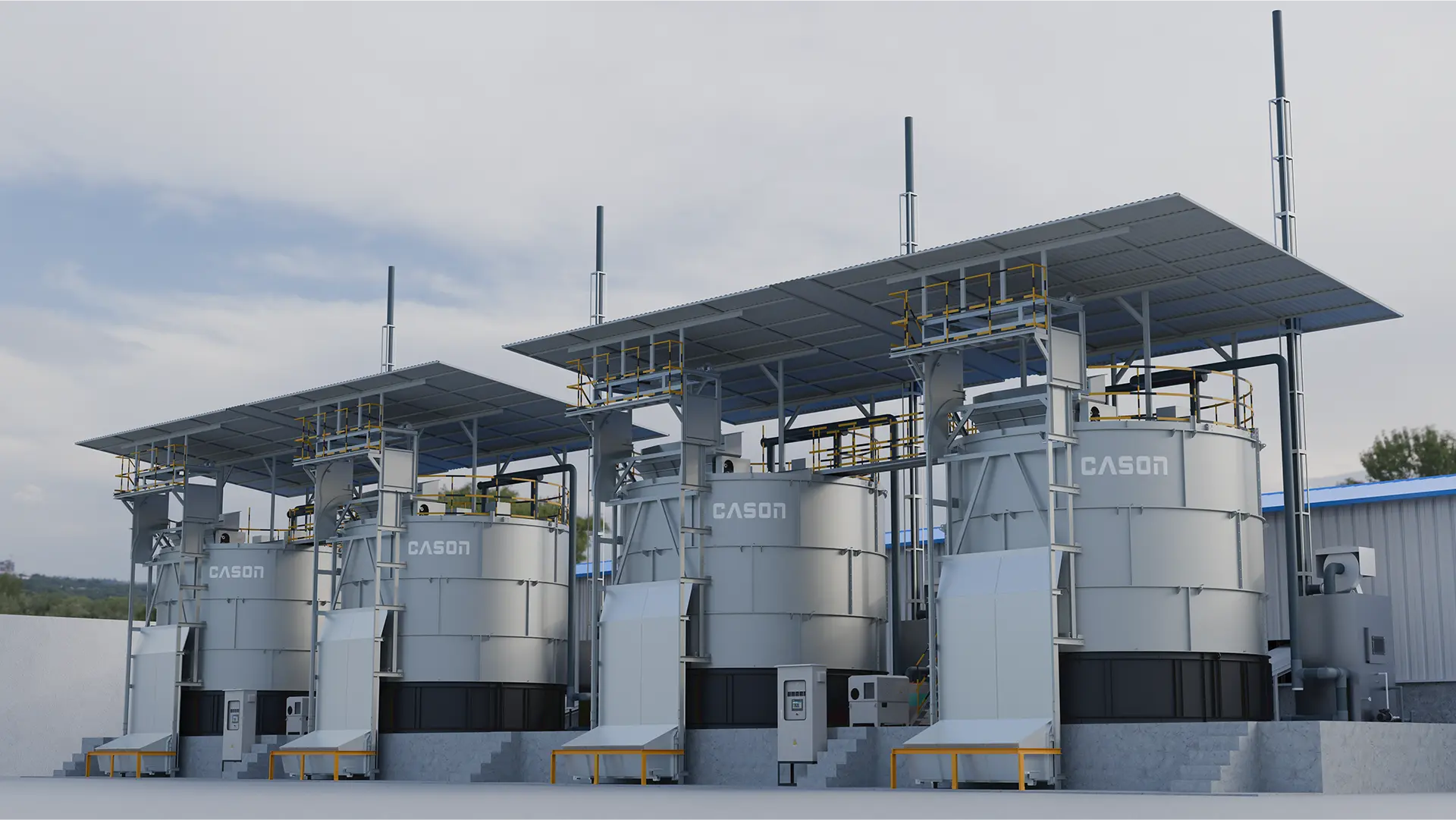
Capacity Planning for Farms of Different Sizes
Farms with compact layouts or lower daily manure volumes often prefer equipment that minimizes ground footprint. In such settings, an organic manure vertical fermentation tank offers practical advantages because its upright design stores heat effectively and reduces the need for wide foundations. Medium farms also benefit from this vertical layout when consistent processing cycles are required. For larger operations, however, parallel modules and staged feeding patterns become more important. The DT configuration accommodates these needs by offering flexible grouping that allows the animal waste fermentation equipment to match increasing herd size. When expansion is expected in the future, this structural difference becomes a key reason why many farms consider the DT option.
Evaluating Workflow and Equipment Coordination
Operational rhythm varies significantly from farm to farm. The C-Series suits facilities with steady manure discharge and predictable collection schedules. Its straightforward loading procedure helps simplify routine work and reduces management complexity. Meanwhile, farms handling mixed organic material or fluctuating waste volumes often look for equipment that can connect smoothly with other treatment steps. In these cases, the DT-Series provides more freedom in layout planning and integration. It supports continuous links with dryers, conveyors, or harmless-treatment units, allowing the organic manure vertical fermentation tank to function as part of a broader closed-loop system. This coordinated approach ensures that daily processing maintains stability while adapting to additional equipment.
Role of Customization and Long-Term Support
Another factor influencing model selection is customization. Our DT-240E serves as a frequent example in consultation discussions. From design planning to follow-up services, our animal waste fermentation equipment can be tailored according to customer preferences, which helps the system align with local management habits. This customization extends to control settings, insulation features, or connection points, ensuring the organic manure vertical fermentation tank integrates naturally into existing farm layouts. Continuous communication from our team further assists customers in refining usage patterns after installation.
Conclusion:Selecting a Structure That Matches Operational Needs
Both series support reliable manure treatment, but farm size, workflow stability, and future expansion plans guide the final choice. Vertical units suit farms seeking compact design and consistent cycles, while modular DT structures better accommodate larger or evolving operations. By understanding how animal waste fermentation equipment performs under different conditions, farms can choose a model that supports sustainable and steady development. With ongoing customization and service, Cason provides equipment options that adapt to each customer’s operational scale.