
As cities continue to expand their sustainability goals, selecting the right system for food waste treatment has become an important planning decision. When we evaluate urban recycling needs, the choice between a food waste fermentation tank with large capacity and a medium-capacity food waste organic fertilizer fermentation tank often determines operational efficiency and long-term stability. At Cason, we observe that each project has unique waste volumes and scheduling patterns, so matching capacity with real urban demand becomes essential rather than optional.
Capacity Considerations for Different Urban Environments
Large-capacity systems offer advantages for districts with centralized waste collection. These areas generate consistent daily loads, and a medium-capacity food waste fermentation tank may require more frequent cycles or additional units. In contrast, compact districts or decentralized neighborhoods often benefit from medium-capacity structures, especially when their collection routes vary. When we help project planners compare options, we emphasize how workflow, transport frequency, and storage arrangements all influence the performance of a food waste organic fertilizer fermentation tank. Proper sizing helps municipalities avoid unnecessary energy consumption and ensures smoother overall operation.
How Our Solutions Support Smoother Project Integration
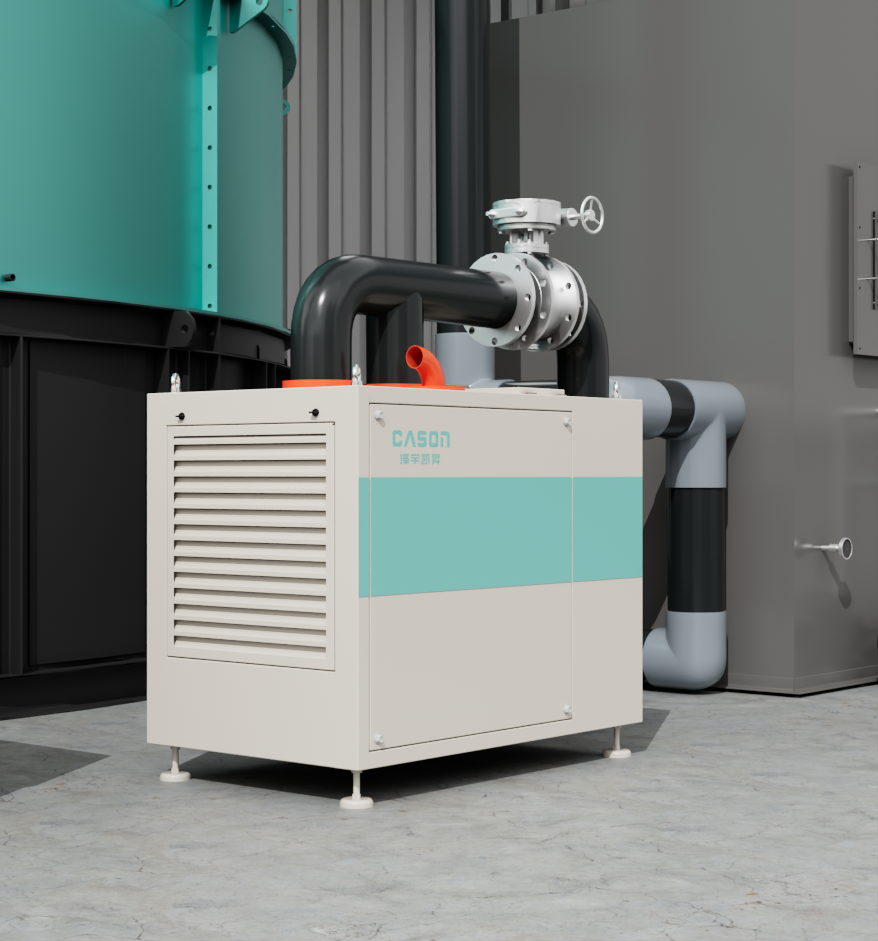
Urban clients often face challenges related to limited space, tight construction schedules, and complex regulatory requirements. With these realities in mind, Cason designs integrated solutions centered on the C-140E food waste organic fertilizer fermentation tank, a model developed for large-capacity and continuous-operation scenarios. Rather than treating each piece of equipment separately, our engineering approach focuses on coordinating all process stages, from waste collection and transfer to fermentation and organic fertilizer output, to form a complete and uninterrupted treatment loop. This integrated structure helps reduce management pressure on facility teams, particularly during peak waste periods when a large-capacity food waste fermentation tank must maintain stable internal conditions over extended operating hours. In addition to system integration, Cason provides continuous professional support throughout project planning, installation, and daily operation, allowing urban facilities to adopt solutions that fit seamlessly into existing workflows. When clients assess whether a large or medium-capacity food waste organic fertilizer fermentation tank aligns with their operational goals, these integration and support capabilities often become a key part of the final decision.
Technology and Energy-Saving Features
To help cities improve operational stability, Cason continues to expand its product portfolio and refine internal control strategies around core fermentation equipment. Within our integrated solution centered on the C-140E food waste organic fertilizer fermentation tank, energy-saving functions are implemented as part of the overall system design rather than as a standalone device. Through intelligent monitoring, the solution tracks temperature, pressure, and motor speed during fermentation and automatically adjusts operating parameters to reduce overload risks and ensure stable performance. Predictive maintenance functions provide early alerts when abnormalities occur, which is particularly valuable for facilities operating a medium-capacity food waste fermentation tank that requires long hours of continuous operation. By supporting the C-140E fermentation tank with coordinated control and monitoring functions, this solution helps urban treatment plants reduce downtime, optimize maintenance planning, and avoid unnecessary operating costs.
Conclusion: Matching Capacity to Real Urban Needs
When choosing between large and medium capacities, the most suitable option depends on actual volumes, collection schedules, and planning priorities. In our experience, a large unit supports centralized districts, while a medium-capacity system offers flexibility for decentralized routes and compact sites. By combining practical capacity planning with reliable features like the adaptive control, we help cities build systems that remain stable, economical, and aligned with long-term sustainability goals. Whether the project adopts a large food waste fermentation tank or a medium-capacity food waste organic fertilizer fermentation tank, proper assessment ensures that the final installation meets modern urban environmental expectations.