
As large farming groups continue to expand their environmental management systems, we at Cason often receive questions about how manure fertilizer fermentation tank solutions support daily operations. In modern livestock environments, this type of system has become a core part of sustainable waste treatment. As a manufacturer deeply involved in the development of animal waste fermentation equipment, we have seen how well-designed tanks help farms convert raw manure into usable organic material while improving hygiene and workflow efficiency. This guide outlines the definition, major types, and primary applications so users can evaluate which configuration fits their facility.
Key Types and Functional Principles
A manure fertilizer fermentation tank is essentially a closed aerobic system that accelerates microbial activity under controlled temperature and oxygen levels. Different tank structures are available, including vertical enclosed vessels, horizontal in-situ composting tanks, and modular units that connect with automatic feeding or scraping systems. Because each farm has different manure volumes and space limitations, selecting suitable animal waste fermentation equipment depends on processing requirements, on-site labor capacity, and expectations for fertilizer output. Over the years, our company has improved tank performance by integrating stable temperature control, reinforced mixing structures, and efficient odor-reduction interfaces, allowing the system to operate reliably even during peak production seasons.
Practical Uses Across Livestock Facilities
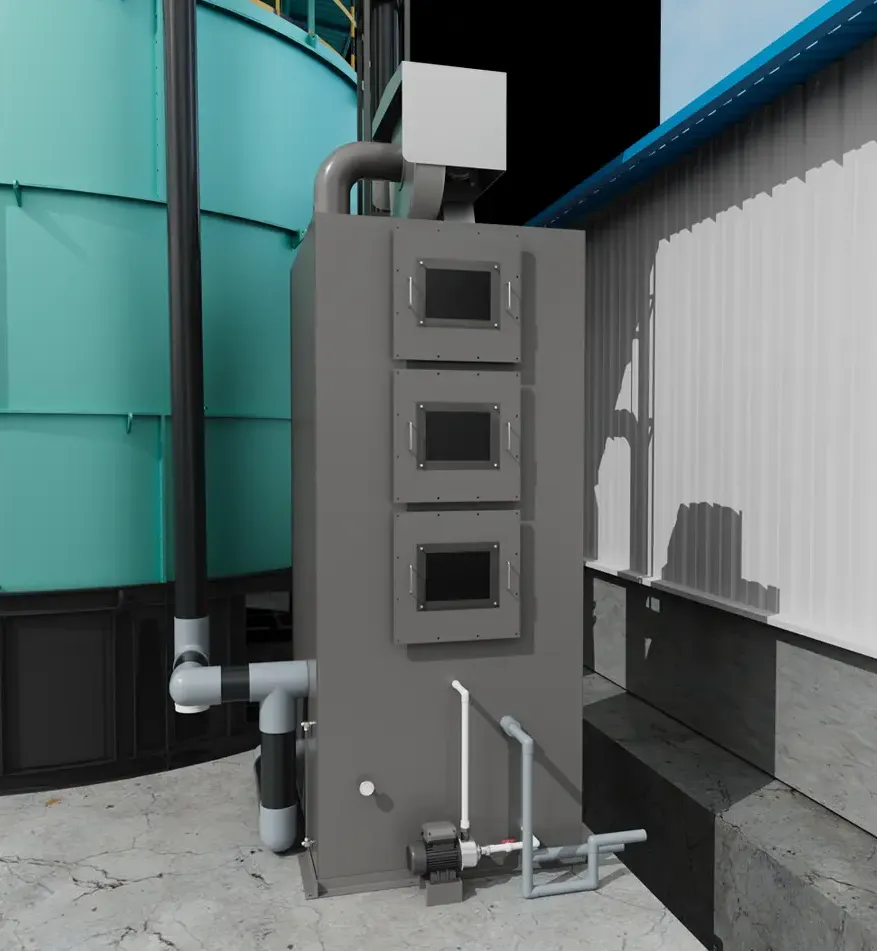
For poultry, swine, and ruminant farms, the daily generation of manure creates both environmental pressure and resource potential. A manure fertilizer fermentation tank converts this material into stable organic fertilizer through continuous aerobic decomposition. This approach reduces odor, supports pathogen reduction, and creates a consistent outlet for organic matter. Many clients also connect the tank with their existing scraper lines or conveyor systems to establish a seamless processing loop. When facilities require enhanced odor control, we provide the DT-240E deodorization unit, which uses a multi-stage Deodorization System. Its structure includes water scrubbing for basic dust and soluble gas removal, acid washing for alkaline odors such as ammonia, alkali washing for acidic components like hydrogen sulfide, and biological deodorization that relies on microorganisms to target remaining gases. This makes the solution suitable for farms that must maintain stricter environmental standards while using animal waste fermentation equipment as part of their operational plan.
Conclusion: How These Tanks Support Sustainable Farm Development
In summary, a manure fertilizer fermentation tank offers a structured method for converting daily manure into a usable resource, and it plays a central role in the sustainable development goals of many livestock groups. By understanding the definitions, types, and uses presented here, decision-makers can better evaluate how such systems fit into long-term planning. As we continue refining Cason solutions—ranging from tanks to deodorization modules and integrated processing lines—we remain committed to providing practical, reliable animal waste fermentation equipment that supports stable operations for modern farms