
As large farms expand their production capacity, many facilities look for reliable ways to manage organic by-products safely and continuously. In our daily work at Cason, we see how animal waste fermentation equipment creates a structured path for farms to transform raw materials into usable resources while reducing operational pressure. For operations dealing with frequent manure output, the biological stability and controlled environment provided by a manure fertilizer fermentation tank help maintain cleaner surroundings and more predictable workflows. These systems also support farms that aim to follow stricter environmental expectations without disrupting routine activities.
Fermentation as a Practical Core Process
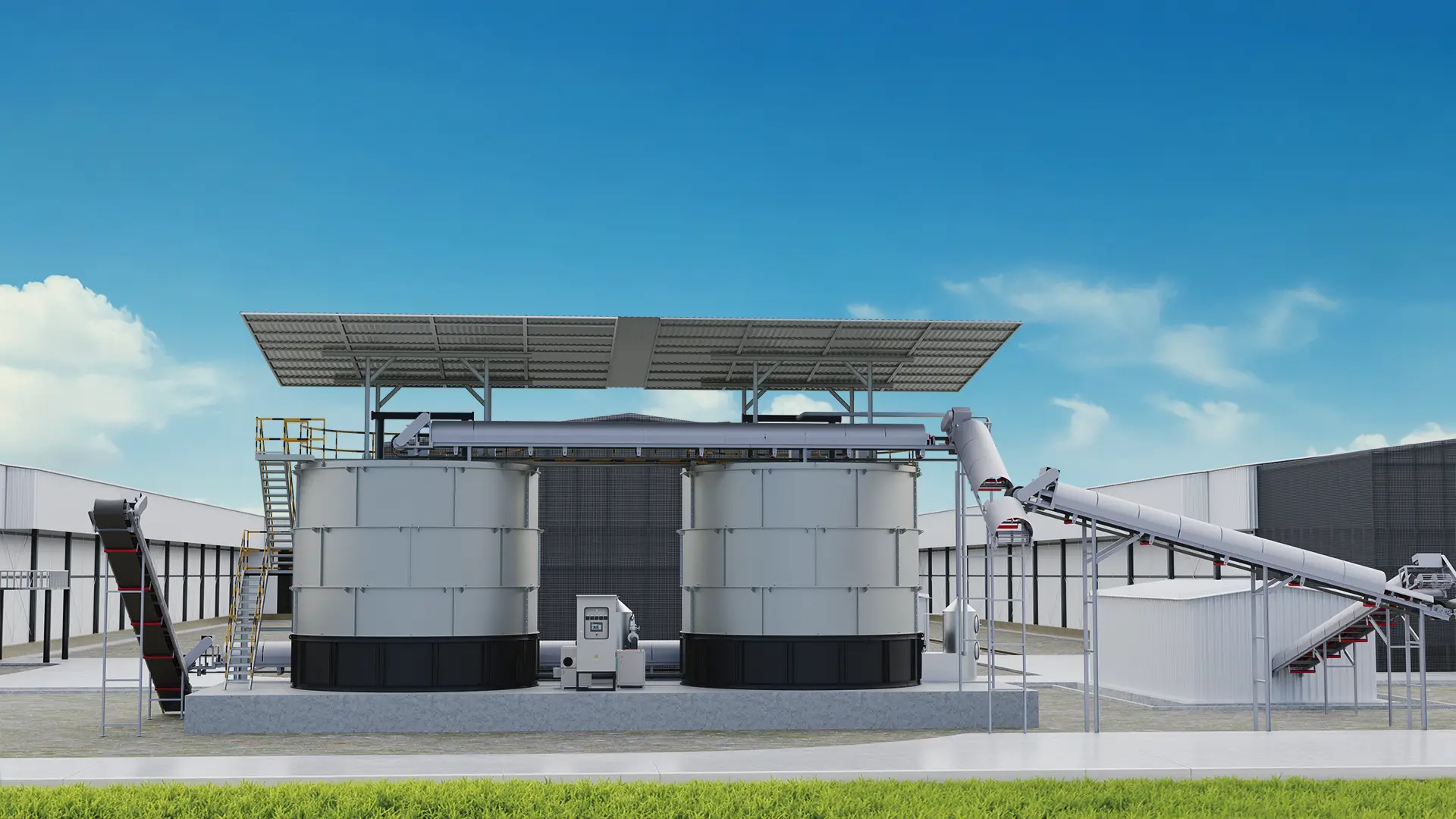
When we design solutions for clients, we often observe that fermentation becomes the central link connecting collection, treatment, and reuse. The controlled aerobic environment offered by our systems ensures consistent temperature, oxygen distribution, and material turnover, which are essential for efficient decomposition. With animal waste fermentation equipment, farms gain a repeatable process rather than depending on weather-sensitive or open-air methods. In many facilities, the use of a manure fertilizer fermentation tank allows managers to monitor each batch more accurately, helping them plan labor and production schedules. To support the movement of materials within this workflow, our DT-240E Remote Conveying System provides an enclosed, automated method to transfer raw inputs and fermented outputs, reducing manual handling and keeping the production route organized.
How Integrated Systems Improve Farm Operations
From our cooperation with large livestock groups, we have learned that consistency, safety, and space efficiency are major priorities. Fermentation technology aligns well with these needs because it forms a defined processing cycle that does not rely on large open areas. Our company has invested in equipment that links each step smoothly so farms can maintain steady operations. For example, animal waste fermentation equipment paired with an automated conveying route reduces the risk of cross-contamination during transfer. A manure fertilizer fermentation tank also supports farms aiming to reuse organic matter as part of a closed resource loop, helping technical managers meet internal standards for environmental stewardship. The modular layout of the DT-240E Remote Conveying System further adapts to varied farm designs, which has been especially helpful for clients modernizing older facilities.
Conclusion: Why Fermentation Matters for Large-Scale Farms
Fermentation systems play a vital role in livestock operations because they create a predictable, hygienic, and continuous method for handling organic waste. By integrating animal waste fermentation equipment, farms gain clearer control over daily waste volumes, and the use of a manure fertilizer fermentation tank enables them to turn organic materials into resources rather than liabilities. With solutions such as our DT-240E Remote Conveying System, we continue to help farms establish stable and efficient production cycles that fit long-term development goals.