
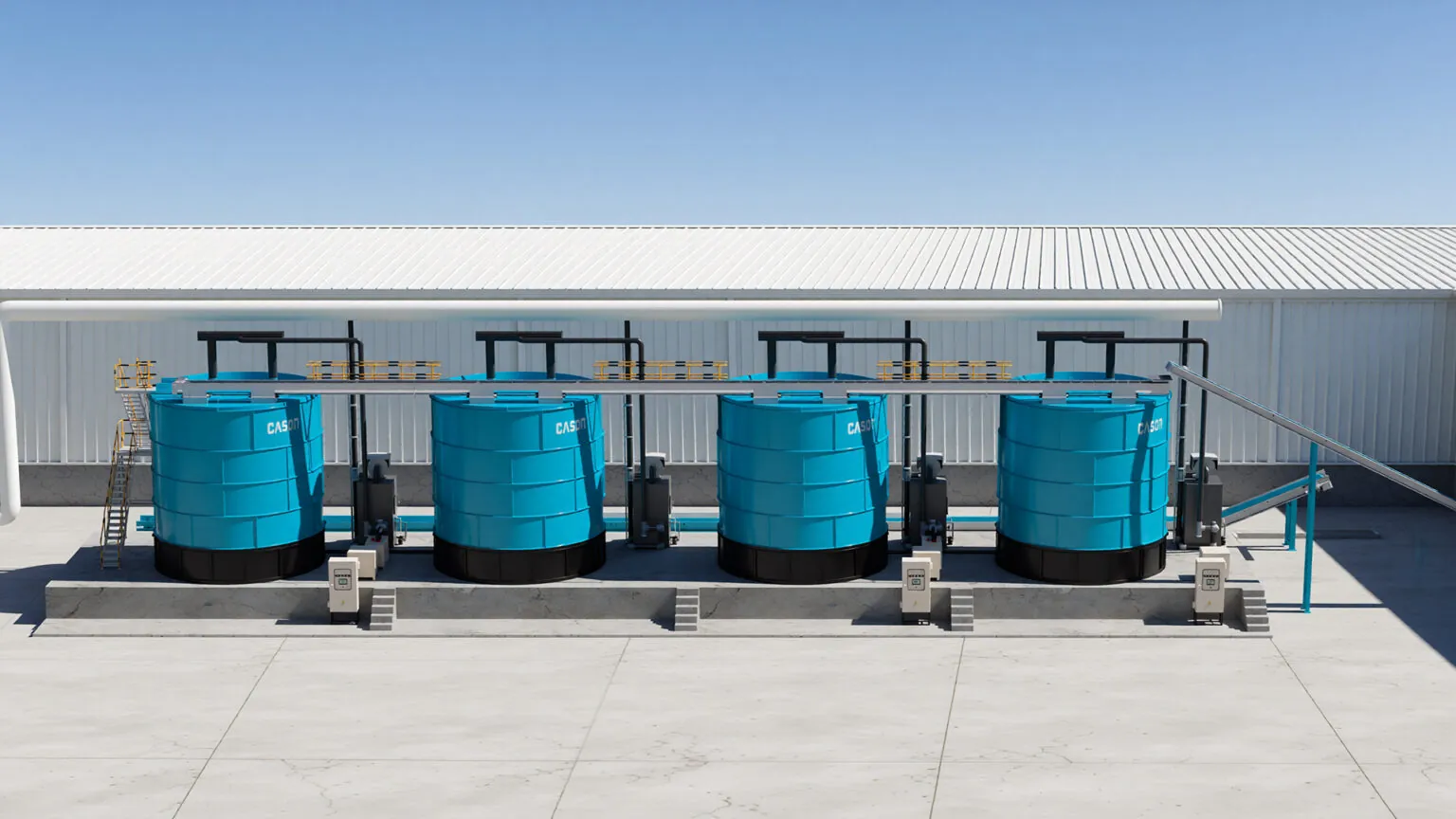
In the world of organic waste management, in-vessel composting offers a controlled environment that accelerates decomposition while minimizing odors and space use compared to traditional methods. At Cason, we’ve worked closely with agricultural facilities and waste processors using the in-vessel composter model, such as the DT-320E, to convert organic waste into usable compost or fertilizer with consistent results. But even with advanced systems, maintaining optimal performance isn’t automatic; regular attention to process factors is essential.
Balancing Key Process Parameters
One of the most frequent issues we observe is imbalance in moisture, temperature, and oxygen levels inside the in-vessel environment. An imbalanced system can slow microbial activity or invite anaerobic conditions that produce undesirable odors and reduce compost quality. Troubleshooting often comes back to ensuring moisture stays within an optimal range and that airflow and aeration support aerobic decomposition. Uncontrolled wetness or dryness can both hinder efficiency.
Temperature control is another critical parameter. The microbial populations driving composting are temperature sensitive: if it’s too cool, activity stalls; if it’s too hot, microbes can become stressed and organic matter breakdown slows. Consistent monitoring and adjustment through your control system helps maintain stable thermal conditions so the process stays productive.
Addressing Contamination and Material Quality
We’ve seen that contamination from non-compostable substances like plastics or metals can reduce performance and contaminate end products. Clear waste sorting protocols before materials enter the in-vessel composter help maintain a high-quality feedstock and reduce interruptions to the composting process. Similarly, uneven particle sizes or highly variable inputs can create microenvironments that are too dry or too wet, which throws off biological activity.
Equipment Maintenance and System Care
Even the best-designed in-vessel composter requires routine maintenance to sustain efficiency. Components such as fans, sensors, and aeration systems play a direct role in process control. If airflow becomes restricted or sensors drift out of calibration, the internal environment can deviate from optimal conditions unnoticed. Scheduled inspections, cleaning of aeration pathways, and verification of sensor readings are simple steps that prevent small issues from becoming major disruptions.
Another maintenance aspect is the handling of exhaust and odors. Systems like the DT-320E include odor control solutions that work best when filters and treatment units are maintained. Neglecting these parts can lead to unnecessary emissions and force operators to adjust the process in ways that compromise efficiency.
Collaborative Approach to Continuous Improvement
At Cason, we believe in partnering with our customers beyond installation to support ongoing success. Regular reviews of operational data, periodic staff training on best practices, and proactive maintenance plans help users avoid common pitfalls in maintaining efficiency. A well-tuned in-vessel composting system not only processes waste reliably but also enhances environmental compliance and resource recovery outcomes.