
When selecting animal waste fermentation equipment, we always begin by assessing the volume and type of materials handled each day. Our company has learned from long-term cooperation with large livestock groups that capacity planning affects the entire treatment flow, from collection to final discharge. Daily manure output, carcass management requirements, and any additional organic waste streams all influence the suitable size of an organic manure vertical fermentation tank. We normally guide our partners to calculate their average production over several days rather than using short-term peak values. This helps avoid selecting a model that is too large or too small, both of which may impact energy use and treatment stability. With this approach, we ensure that the tank operates in a steady aerobic condition, which is essential for consistent fermentation.
Evaluating Site Layout and Existing Processes
Space conditions are another important consideration when choosing the right capacity. Many livestock farms we work with need equipment that fits within existing corridors, feeding lanes, or waste-transfer routes. Since different facilities have different loading methods—manual, conveyor-based, or scraper-based—we assess how the chosen capacity will integrate with the overall farm layout. The collaboration with many project teams has shown us that an oversized unit may complicate installation or disrupt current workflows. Because our service team accompanies the entire process from early planning to commissioning, we can help clients match equipment size with the available infrastructure. This ensures that Cason solutions maintain smooth material transfer and allow the full fermentation cycle to proceed without unnecessary adjustments to daily operations.
Matching Capacity to Operational Goals
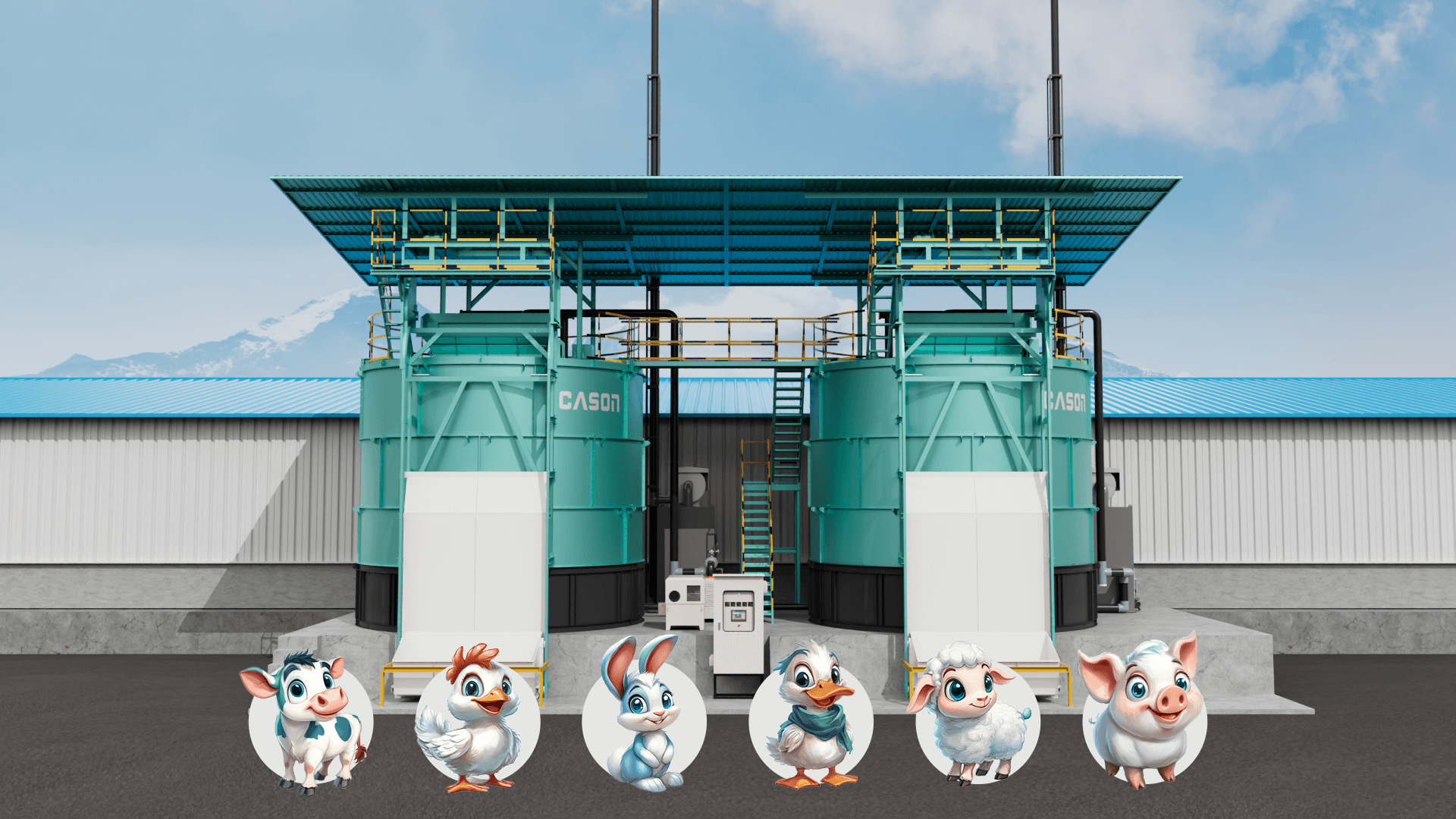
Capacity also relates to the expected treatment cycle and the farm’s long-term development plan. Some partners prioritize rapid turnover, while others focus on long retention times for complete stabilization. For these different targets, we recommend choosing a tank capacity that aligns with their processing rhythm. For example, our DT-240E model is suitable for various materials, including livestock and poultry manure—such as chicken, pig, cow, sheep, and rabbit manure—as well as carcasses of chickens, cows, sheep, horses, rabbits, and pigs. It can also be used for kitchen waste and similar organic materials. Farmers who handle multiple waste types may need a larger capacity to maintain continuous operation. By comparing the expected cycle time with the incoming volume, we help customers find a balanced configuration that supports both efficiency and long-term resource utilization.
Conclusion: Making an Informed Capacity Decision
Selecting the proper capacity for animal waste fermentation equipment or an organic manure vertical fermentation tank requires a careful review of daily material output, workflow design, and operational targets. Through our experience offering complete solutions, we support farms in determining a size that fits their real conditions without disrupting existing processes. With practical evaluation and steady technical guidance, we ensure that each system contributes to consistent treatment results and supports sustainable development in modern livestock operations.